
Air + Roadvia Jabalpur
Delhi Bandhavgarh
The combination protects time for the first forest orientation.
India Wildlife Tours · Private Dossier
Bandhavgarh & Kanha Photography Safari
A concentrated photography journey through Bandhavgarh and Kanha, designed around light, repeated field time, ethical positioning and the patience required to photograph wildlife well.
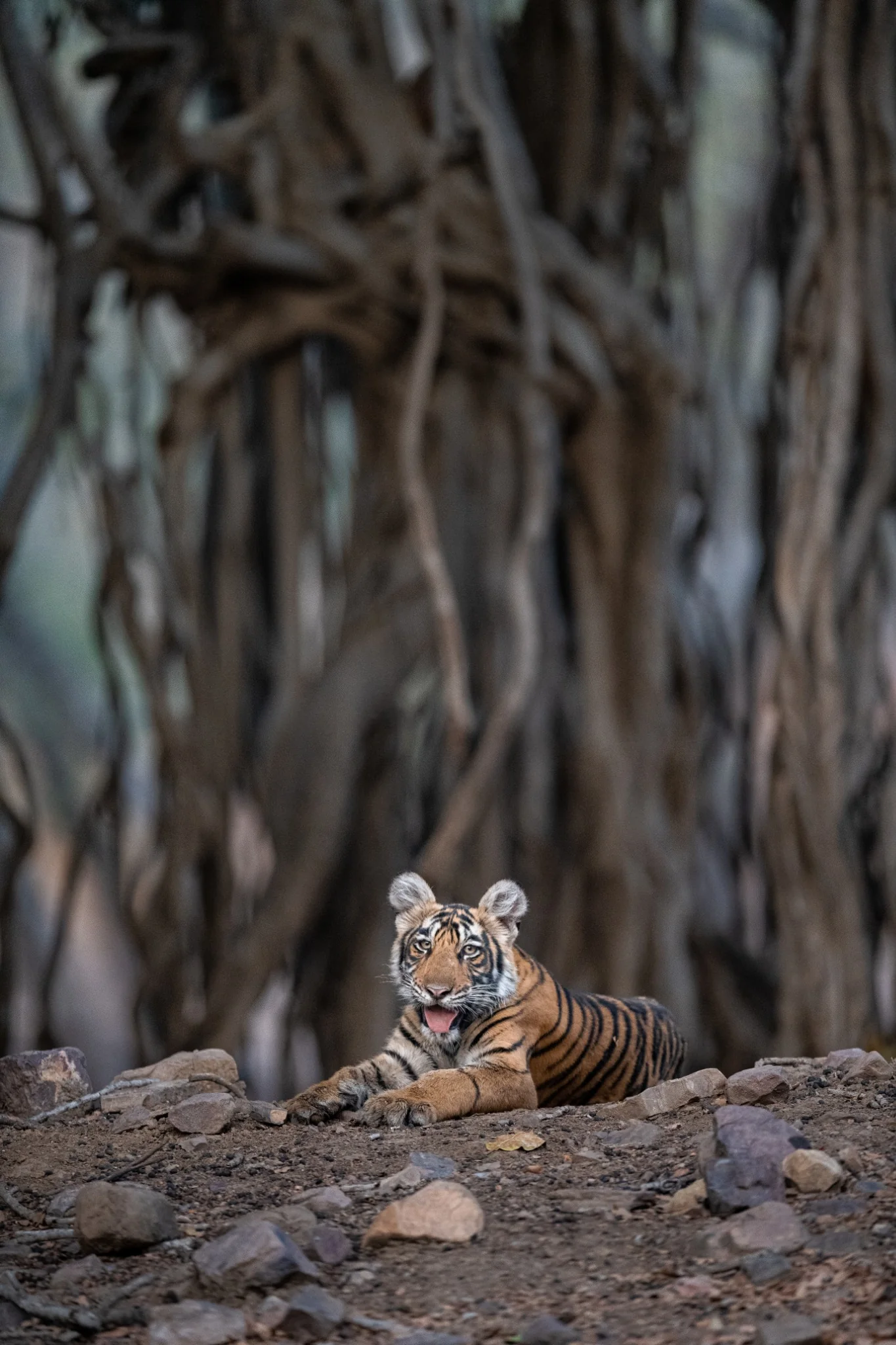
Bandhavgarh and Kanha offer contrasting photographic stages: tighter forest and rocky terrain in Bandhavgarh, then wider meadows, sal forest and layered backgrounds in Kanha. Repeated drives allow the photographer to learn individual zones rather than chasing novelty every day.
The programme is suitable for serious enthusiasts and thoughtful beginners. Vehicle occupancy, equipment support and naturalist choice are planned around the photographic brief, while animal welfare and park rules remain non-negotiable.
The combination protects time for the first forest orientation.
A private transfer links two different photographic habitats.
The final movement is designed around flight timing and rest stops.
Review camera settings, field etiquette, vehicle positioning and realistic expectations.
Work with forest edges, rocky backdrops and a reserve known for compelling tiger habitat.
Use meadows, sal forest, barasingha and longer sight lines for more environmental images.
Interpret behaviour and light rather than simply accumulating sightings.
No baiting, crowding or pressure on the animal; the photograph follows the encounter.
Arrive Delhi — Gateway to the Jungle is treated as an arrival day, not a sightseeing test. Meet-and-assist, the private transfer and check-in are coordinated together, leaving the remaining hours free for rest and orientation.
On arrival, the practical details are handled quietly. Arrive at Indira Gandhi International Airport; meet your Epic Indian Travel representative. Transfer to your hotel in central Delhi. Assisted check-in and welcome briefing from your naturalist-photographer guide. Overview of the 13-day photography itinerary — safari zones, photography strategy and what to expect in the jungle.
As the light softens, the day changes pace. Comprehensive pre-safari briefing: camera settings for wildlife photography in jungle light, burst mode strategy, exposure compensation for backlit tigers. Discussion of Bandhavgarh's tiger families, territory maps and the best zones for photography. Introduction to animal behaviour reading — how to anticipate a tiger's movement before it happens. Review of safari etiquette: silence in the jeep, no flash photography, respecting the animals' space.
At the start of Central India Wildlife Photography Safari, assistance, the private transfer and check-in are handled as one sequence, with no compulsory sightseeing added after the flight.
Overnight: Delhi
A full day in Delhi — part sightseeing, part photography workshop. Delhi's UNESCO World Heritage monuments offer extraordinary photographic subjects: the geometric perfection of Humayun's Tomb, the soaring verticality of Qutb Minar, the warm sandstone of India Gate at dusk. Your guide will use today's city photography as a practical warm-up session — discussing composition, light reading and the discipline of patience that defines great wildlife photography.
Begin in the cooler morning hours. Guided photography tour of Delhi's UNESCO World Heritage Sites — with your naturalist-photographer guide offering composition and light advice at each location. Qutb Minar at sunrise — the best light of the day on the 73-metre sandstone minaret; practice shooting in low light and managing high-contrast scenes. Humayun's Tomb — symmetry, reflection pools and the warm tones of Mughal sandstone; practice depth of field and architectural composition. Iron Pillar of Delhi — a 1,600-year-old metallurgical marvel; practice close-up and detail photography.
Later, the focus shifts. India Gate at golden hour — practice shooting into the light, silhouettes and long exposures with crowds. Rashtrapati Bhavan and Parliament — architectural photography in the late afternoon light.
For “Delhi — Monuments, Markets & Photography Workshop”, the sequence follows light, opening hours and local traffic, prioritising the principal visit while keeping secondary stops adaptable.
Overnight: Delhi
Fly Delhi to Jabalpur — Drive to Bandhavgarh Tiger Reserve is planned around the natural rhythm of the habitat. Field time is balanced with a proper rest interval, while the naturalist adapts the route to weather, tracks and current park conditions; wildlife encounters can never be guaranteed.
Begin in the cooler morning hours. Early transfer to Indira Gandhi International Airport for domestic flight to Jabalpur. Arrive Jabalpur — the gateway to the jungles of Madhya Pradesh. Met by your driver and naturalist-photographer guide at Jabalpur Airport. Begin the 3-hour drive north-east to Bandhavgarh through the Vindhya hills.
Return to lodge for dinner. Evening image review: discuss the afternoon's photographs and plan tomorrow's dawn safari. Overnight at Bandhavgarh (Night 1 of 4).
For “Fly Delhi to Jabalpur — Drive to Bandhavgarh Tiger Reserve”, field sessions are balanced with proper recovery time, allowing the naturalist to respond to weather, tracks and park conditions.
Overnight: Bandhavgarh
Bandhavgarh — First Full Day Photography Safaris — Tala Zone is planned around the natural rhythm of the habitat. Field time is balanced with a proper rest interval, while the naturalist adapts the route to weather, tracks and current park conditions; wildlife encounters can never be guaranteed.
For “Bandhavgarh — First Full Day Photography Safaris — Tala Zone”, field sessions are balanced with proper recovery time, allowing the naturalist to respond to weather, tracks and park conditions.
Overnight: Bandhavgarh
Bandhavgarh — Magadhi & Khitauli Zones — Exploring New Photographic Territory has one clear purpose within Central India Wildlife Photography Safari. The principal experience is protected, while secondary stops remain flexible around weather, access and guest energy.
Enter Magadhi at first light, when its mixed forest and open grassland give the photographer room to work with both portrait and environmental compositions. The naturalist follows current signs rather than a fixed checklist, watching for tiger movement, sloth bears around rocky ground, and leopards resting on shaded slopes. Any encounter remains entirely wild; the emphasis is on reading behaviour, positioning responsibly and making the most of the available light.
Khitauli has a quieter, less manicured character, with open meadows, seasonal water and long views into the forest edge. Late light can create strong backlit silhouettes of gaur, deer and—when fortune allows—a tiger crossing the grass. The session is paced around one promising area rather than constant driving, giving photographers time to anticipate movement and compose carefully.
“Bandhavgarh — Magadhi & Khitauli Zones — Exploring New Photographic Territory” is kept focused on one principal experience, with the surrounding hours left adaptable to access, weather and guest energy.
Overnight: Bandhavgarh
The final full day in Bandhavgarh — two last safaris to consolidate everything learned in the first three days and capture the images that have been building in your mind since arrival. By now, you know the zones, you know the light, you know the animals — and your camera settings are second nature. Today is the day to take your finest photographs of the entire Bandhavgarh stay.
In the field, the day follows the natural rhythm of the habitat. The final dawn safari is approached with the same patience as the first. Zone access follows the confirmed permit, while your naturalist reads recent signs, weather and animal movement within the allotted area. The photographic focus may shift from behaviour and habitat to low-light technique, movement and the relationship between wildlife and Bandhavgarh's forested ruins.
Later, the focus shifts. Arrive at your photography lodge on the edge of Kanha National Park — a different world from Bandhavgarh: wider, more open, with vast meadows and a sweeping, cinematic landscape. Check-in and welcome briefing from your Kanha naturalist-photographer guide. Introduction to Kanha's zones: Kanha Maidan (the central meadow), Kisli, Mukki and Sarhi — each with its own character and photographic opportunities. Learn about Kanha's tiger habitat and the conservation story of the hardground barasingha, a rare Central Indian deer whose recovery is closely associated with this park.
For “Bandhavgarh — Full Day Safaris & Drive to Kanha”, field sessions are balanced with proper recovery time, allowing the naturalist to respond to weather, tracks and park conditions.
Overnight: Kanha
Kanha — First Full Day Photography Safaris — Kanha Maidan & Kisli Zone is planned around the natural rhythm of the habitat. Field time is balanced with a proper rest interval, while the naturalist adapts the route to weather, tracks and current park conditions; wildlife encounters can never be guaranteed.
Begin in the open country around Kanha Maidan, where low morning light reaches the grasslands before filtering into the sal forest. The session is useful for wider habitat images, barasingha herds and birdlife, while the naturalist adjusts the route to fresh tracks, alarm calls and the morning’s zone conditions.
Kisli shifts the visual language from open meadow to dense sal forest. Work with dappled light, layered tree trunks and animals moving between shade and clearing; gaur, deer and raptors can be as rewarding as a cat sighting. The guide positions the vehicle conservatively so the subject has space and the photograph retains a sense of habitat.
For “Kanha — First Full Day Photography Safaris — Kanha Maidan & Kisli Zone”, field sessions are balanced with proper recovery time, allowing the naturalist to respond to weather, tracks and park conditions.
Overnight: Kanha
Day eight brings a shift in photographic focus — from the tiger to the extraordinary supporting cast of Kanha's wildlife. The Mukki Zone, on the southern edge of the park, is the finest area for Hardground Barasingha photography, with large herds grazing in the open meadows throughout the day. Kanha is also one of India's finest birdwatching and bird photography destinations — with over 300 species including the Indian Pitta, Malabar Pied Hornbill, Crested Serpent Eagle and the rare Jerdon's Nightjar.
Mukki’s grassland and forest edge are especially valuable for photographing the hard-ground barasingha, a conservation success closely associated with Kanha. Look for herd behaviour, antler detail, birds of prey and animals moving through the wider landscape. Tiger activity is possible but never assumed; the photographic objective is a complete record of the habitat, not a single promised subject.
Return to a meadow or water source selected from the day’s field information. Instead of chasing reports, settle at a respectful distance and allow deer, gaur, birds and other wildlife to approach naturally. The falling light can produce strong silhouettes and atmospheric forest images even when the larger predators remain out of view.
For “Kanha — Mukki Zone & Specialist Wildlife Photography — Barasingha & Birds”, field sessions are balanced with proper recovery time, allowing the naturalist to respond to weather, tracks and park conditions.
Overnight: Kanha
The final full day in Kanha — and the final day of jungle photography on this safari. By now, your eye has been trained by eight days in the field, your camera settings are instinctive and your understanding of animal behaviour has been transformed. Today is the day to bring everything together — to photograph with confidence, creativity and the deep knowledge of the jungle that only comes from sustained time in the field.
The naturalist chooses the zone from current signs, permit allocation and the previous day’s activity. Use the final dawn session to complete the portfolio with habitat, behaviour and supporting species—not only close portraits. Patience, quiet vehicle positioning and readiness for changing light matter more than moving constantly between reported sightings.
Later, the focus shifts. Final afternoon safari in Kanha — make the most of the golden hour light and the last hours in the park. Focus on tigers at waterholes and other wildlife coming out in the late afternoon. Use this session to complete your portfolio with the strongest remaining images. Stay until last light for silhouettes, atmosphere and one final view of the forest.
For “Kanha — Final Full Day Photography Safaris”, field sessions are balanced with proper recovery time, allowing the naturalist to respond to weather, tracks and park conditions.
Overnight: Kanha
The final morning of the safari begins at Kanha with check-out and the drive south to Nagpur through the Satpura hills and the Vidarbha plains. Along the way, the landscape shifts from jungle to farmland, offering one last scenic passage through central India before arriving in Nagpur and continuing by flight to Delhi and onward connections home. Ten days in the field, two of India's greatest national parks, and a portfolio of wildlife images that will last a lifetime.
Begin in the cooler morning hours. Final breakfast at your Kanha lodge. Check-out and load luggage. Begin the 5-hour drive south to Nagpur through the Satpura hills and the Vidarbha plains. Photography stops en route: the Satpura hills, the Wainganga River valley and the transition from jungle to agricultural landscape.
You leave with a more disciplined approach to wildlife photography: faster camera decisions, a better understanding of animal behaviour, and a portfolio that includes habitat, supporting species and the uncertain moments that define a real safari. Image review can be arranged during the journey, but the forest—not a promised checklist—sets the final result.
The move described in “Kanha — Drive to Nagpur & Fly Delhi / Home” is scheduled as part of the experience, with a realistic departure and enough margin for an unhurried arrival.
Overnight: Delhi
Practical rooms, dependable charging and easy equipment handling support early starts and long field days.
The strongest bases pair comfortable rooms with experienced naturalists who can read the forest and shape each drive.
Use lodges with calm common spaces and efficient safari logistics for repeated early starts.
Hotel names and room categories for Central India Wildlife Photography Safari are confirmed after your dates, preferred character, budget and current availability are understood.
Adjust Central India Wildlife Photography Safari with an extra recovery night, a shorter road day or a gentler start where the route and your energy benefit.
For Central India Wildlife Photography Safari, choose among the stay characters described above, then set room category and service level around how you expect to use the hotel.
For Central India Wildlife Photography Safari, deepen the fieldwork with a private vehicle where permitted, a photography mentor, birding time or additional drives in the strongest habitat.
For Central India Wildlife Photography Safari, for October to March for softer light; April for drier visibility and heat-tolerant guests, we refine sightseeing hours, transfer starts and access around heat, rain, winter conditions, crowds and local operating days.
Epic Indian Travel Concierge
Tell us which chapter of Central India Wildlife Photography Safari matters most and where you would prefer more time, privacy or specialist depth.