
Delhi · Guwahati · Kaziranga
Two principal movements
Airapprox. 2.5 hrs
Delhi Guwahati
The flight provides the practical gateway to Assam.
Roadapprox. 5 hrs
Guwahati Kaziranga
Tea country and the Brahmaputra landscape introduce the northeast.
India Wildlife Tours · Private Dossier
Red Panda · Rhino · Elephant
A species-led expedition linking the floodplain grasslands of Kaziranga with the temperate forests of Singalila—moving from rhino and elephant country to the quiet search for the red panda.
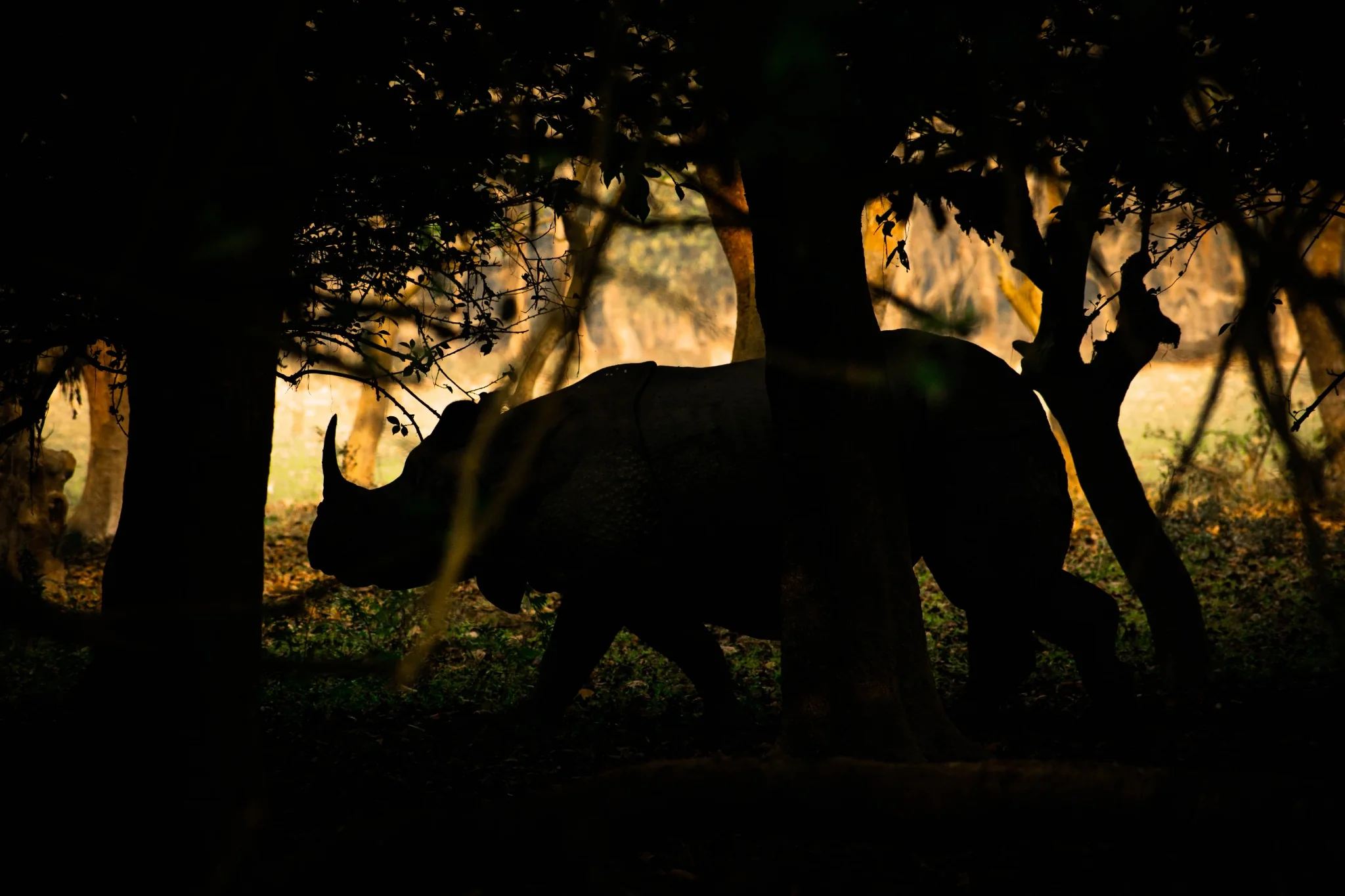
Kaziranga is read from a jeep across tall grassland, wetlands and riverine forest, with the greater one-horned rhinoceros, Asian elephant and exceptional birdlife at the centre. Singalila slows the pace: local trackers, forest trails and patient observation replace the vehicle-led safari.
This is a rewarding journey for travellers interested in species diversity and landscape change. Mountain weather, trail conditions and wildlife movement determine the daily plan, so flexibility is a strength rather than a compromise.
Two principal movements
The flight provides the practical gateway to Assam.
Tea country and the Brahmaputra landscape introduce the northeast.
Two principal movements
The routing is confirmed around the best operating connection.
A private vehicle climbs into the Eastern Himalayan foothills.
One principal movement
The final descent and flight are protected by a realistic time buffer.
Pacing note for Eastern India Wildlife Expedition Exact flight, rail and road timings are reconfirmed for your travel dates, with weather, permits, altitude and local conditions allowed for where relevant.
Track rhino, elephant, wild buffalo, deer and birdlife across several reserve ranges.
Understand how seasonal flood, tall grass and the Brahmaputra shape the wildlife.
Walk quietly with local trackers through bamboo and temperate forest.
Look for mixed feeding flocks and mountain species as altitude and habitat change.
A journey that rewards careful observation rather than one headline animal alone.
Delhi — India's ancient and modern capital — is the starting point for your Red Panda, Rhino & Elephant Expedition. Your Epic Indian Travel representative meets you on arrival at Indira Gandhi International Airport and transfers you to your hotel in the heart of the city. This first evening is yours to relax, explore the neighbourhood and prepare for the extraordinary wildlife journey ahead.
Your Epic Indian Travel representative meets you at Indira Gandhi International Airport and transfers you to your hotel. All travel documents, park permits and a full expedition briefing are provided this evening — covering the wildlife, habitats and logistics of both Kaziranga and Singalila. Equipment check and any last-minute preparations. Your guide is available to answer all questions about the itinerary, the national parks and the wildlife you are likely to encounter.
As the light softens, the day changes pace. Delhi rewards the curious traveller — the evening offers time to explore the vibrant streets of Connaught Place, sample the extraordinary street food of Chandni Chowk or simply rest after a long international flight. Your guide is on hand to recommend the best local restaurants and evening walks in one of the world's great capitals.
For “Arrive New Delhi — Gateway to the Expedition”, the arrival is deliberately light: assistance, transfer and check-in are handled as one sequence, with no compulsory sightseeing added after the flight.
Overnight: Delhi
Delhi to Guwahati to Kaziranga — Into Rhino Country is treated as part of the journey rather than lost time. Departure, one worthwhile pause where appropriate and arrival are sequenced with enough margin to protect the evening at the next stay.
Take a morning flight from Delhi to Guwahati, with the exact schedule confirmed once the operating timetable is published. Your representative meets you on arrival for the drive to Kaziranga, roughly 250 kilometres through Assam’s tea country, river plains and market towns. A sensible flight choice should allow arrival at the lodge by late afternoon without presenting an estimated time as a guarantee.
In the field, the day follows the natural rhythm of the habitat. The afternoon brings your first jeep safari into Kaziranga National Park. The Central Range — the most productive zone for rhino sightings — is the focus of this introductory drive. The Greater One-Horned Rhinoceros is almost certain to be encountered, often at remarkably close range, grazing in the tall elephant grass or wallowing in the park's shallow pools.
The move described in “Delhi to Guwahati to Kaziranga — Into Rhino Country” is scheduled as part of the experience, with a realistic departure and enough margin for an unhurried arrival.
Overnight: Kaziranga
Two full days of morning and afternoon jeep safaris through Kaziranga's diverse range zones — the Central, Western and Eastern Ranges each offer distinct habitats and wildlife encounters. The Central, Western and Eastern ranges reveal different combinations of grassland, wetland and woodland. One-horned rhinoceros is the reserve's defining species, while elephant, wild water buffalo, deer, birdlife and—occasionally—tiger broaden the field experience; no sighting is guaranteed.
In the field, the day follows the natural rhythm of the habitat. Each day follows the classic Kaziranga rhythm: an early morning jeep safari departing at dawn, when the park's animals are most active and the light is at its most beautiful for photography. The morning drive typically lasts three to four hours before returning to the lodge for breakfast. An afternoon safari departs in the cooler hours of the late afternoon, returning at dusk.
Kaziranga supports Greater One-Horned Rhinoceros, Asian Elephant, Wild Water Buffalo, Gaur, Swamp Deer, Hog Deer, Jackal and Bengal Tiger. Its floodplains and wetlands also attract fishing eagles, adjutant storks, osprey, swamp partridge and waterfowl. The naturalist interprets whatever the landscape reveals on each drive.
For “Kaziranga — Full Days of Rhino, Elephant & Tiger Safaris”, field sessions are balanced with proper recovery time, allowing the naturalist to respond to weather, tracks and park conditions.
Overnight: Kaziranga
Kaziranga to Bagdogra to Singalila — Into Red Panda Country is planned around the natural rhythm of the habitat. Field time is balanced with a proper rest interval, while the naturalist adapts the route to weather, tracks and current park conditions; wildlife encounters can never be guaranteed.
Leave Kaziranga early for Guwahati airport and fly to Bagdogra on the most practical available connection. Your representative meets you on arrival for the onward drive into the Himalayan foothills, passing tea gardens and hill settlements before the final approach to the Singalila area. Flight times and the overnight stop are confirmed around the seasonal operating schedule.
Established in 1986, Singalila protects one of the finest Red Panda habitats in the world — a mosaic of rhododendron, oak, fir and bamboo forest on the West Bengal3Nepal border. The park is also home to Himalayan Black Bear, Yellow-throated Marten, Barking Deer, Serow and over 300 bird species. On clear evenings, the Kanchenjunga massif dominates the horizon.
For “Kaziranga to Bagdogra to Singalila — Into Red Panda Country”, field sessions are balanced with proper recovery time, allowing the naturalist to respond to weather, tracks and park conditions.
Overnight: Singalila
The first full day of Red Panda tracking in Singalila National Park. Animals are most active in the early morning — rise before dawn and head into the forest with the lodge's expert trackers, who have an extraordinary near-100% success rate in locating these elusive and enchanting creatures.
In the field, the day follows the natural rhythm of the habitat. The day begins before sunrise. The lodge's dedicated trackers — many born and raised in the surrounding villages — lead the morning expedition into the forest. Spotting scopes and binoculars are provided. The trackers know every tree hollow, bamboo thicket and rocky outcrop where Red Pandas are known to rest and feed. Their knowledge of individual animals and territories is extraordinary.
Between tracking sessions, the lodge's in-house birding studio offers a remarkable opportunity to photograph the park's extraordinary avifauna at close range. Blood Pheasant, Satyr Tragopan, Kalij Pheasant, Fire-tailed Myzornis and Golden-breasted Fulvetta are among the species regularly attracted to the studio's feeding stations.
For “Singalila — First Red Panda Tracking Day”, field sessions are balanced with proper recovery time, allowing the naturalist to respond to weather, tracks and park conditions.
Overnight: Singalila
Singalila — Continued Red Panda Tracking & High-Altitude Birding is planned around the natural rhythm of the habitat. Field time is balanced with a proper rest interval, while the naturalist adapts the route to weather, tracks and current park conditions; wildlife encounters can never be guaranteed.
In the field, the day follows the natural rhythm of the habitat. Pre-dawn departures with the trackers, scanning the rhododendron canopy and bamboo groves for the distinctive russet form of the Red Panda. Trackers monitor individual animals and their territories. Extended observation of feeding, resting and social behaviour is common — guests often spend hours with the same individual animals across successive days.
Over 300 species recorded in the park, including Blood Pheasant, Satyr Tragopan, Rufous-vented Tit, Brown and Fulvous Parrotbills, Wren Babblers, Laughingthrushes, Rosefinches, Bullfinches and the spectacular Fire-tailed Myzornis. The lodge's birding studio provides unparalleled photographic opportunities throughout the stay.
For “Singalila — Continued Red Panda Tracking & High-Altitude Birding”, field sessions are balanced with proper recovery time, allowing the naturalist to respond to weather, tracks and park conditions.
Overnight: Singalila
The final morning on the Singalila Ridge — one last dawn walk in the forest before checking out and beginning the journey back to Delhi. The drive down through the national park and tea gardens to Bagdogra airport offers a final chance to absorb the extraordinary landscapes of northeast India.
Begin in the cooler morning hours. Rise early for a final pre-dawn walk with the trackers — a last opportunity to encounter the Red Panda in the morning forest before the expedition draws to a close. After breakfast, check out from the lodge and board the Land Rovers for the descent through Singalila National Park to Manebhanjan, then onward to Bagdogra airport.
As the light softens, the day changes pace. Delhi offers a last evening to explore — a farewell dinner in one of the capital's excellent restaurants, a stroll through Lodi Garden or a final browse of the craft markets of Hauz Khas Village. Your guide is on hand to make recommendations and arrange reservations for this final night in India.
The move described in “Singalila to Bagdogra to Delhi — Farewell to the Forest” is scheduled as part of the experience, with a realistic departure and enough margin for an unhurried arrival.
Overnight: Delhi
The final arrangements for Delhi — Fly Home are kept deliberately simple: check-out, a private transfer and realistic airport margin are coordinated around the confirmed flight time.
After breakfast, your Epic Indian Travel representative transfers you to Indira Gandhi International Airport in good time for your departure. This is the moment to reflect on an extraordinary journey — from the prehistoric grandeur of Kaziranga's rhino-filled grasslands to the misty rhododendron forests of Singalila and the enchanting Red Panda.
Epic Indian Travel offers a range of extension tours — from the Golden Triangle of Delhi, Agra and Jaipur to the tiger reserves of Ranthambore and Jim Corbett, or the birding paradise of Bharatpur. Speak to your representative about tailoring the perfect extension to your expedition.
For “Delhi — Fly Home”, the closing day protects the flight connection with a realistic transfer margin and no unnecessary programme added before departure.
Departure / onward journey
A naturalist-led lodge near the right range supports early safaris, quiet recovery and a genuine sense of Assam.
Simple warmth, attentive local hosting and proximity to the trail matter more here than conventional luxury.
A dependable city or foothill base protects the journey around regional flights, weather and mountain roads.
Hotel names and room categories for Eastern India Wildlife Expedition are confirmed after your dates, preferred character, budget and current availability are understood.
Adjust Eastern India Wildlife Expedition with an extra recovery night, a shorter road day or a gentler start where the route and your energy benefit.
For Eastern India Wildlife Expedition, choose among the stay characters described above, then set room category and service level around how you expect to use the hotel.
For Eastern India Wildlife Expedition, deepen the fieldwork with a private vehicle where permitted, a photography mentor, birding time or additional drives in the strongest habitat.
For Eastern India Wildlife Expedition, for October to April; red panda tracking is strongest in cool, clear months, we refine sightseeing hours, transfer starts and access around heat, rain, winter conditions, crowds and local operating days.
Epic Indian Travel Concierge
Tell us which chapter of Eastern India Wildlife Expedition matters most and where you would prefer more time, privacy or specialist depth.