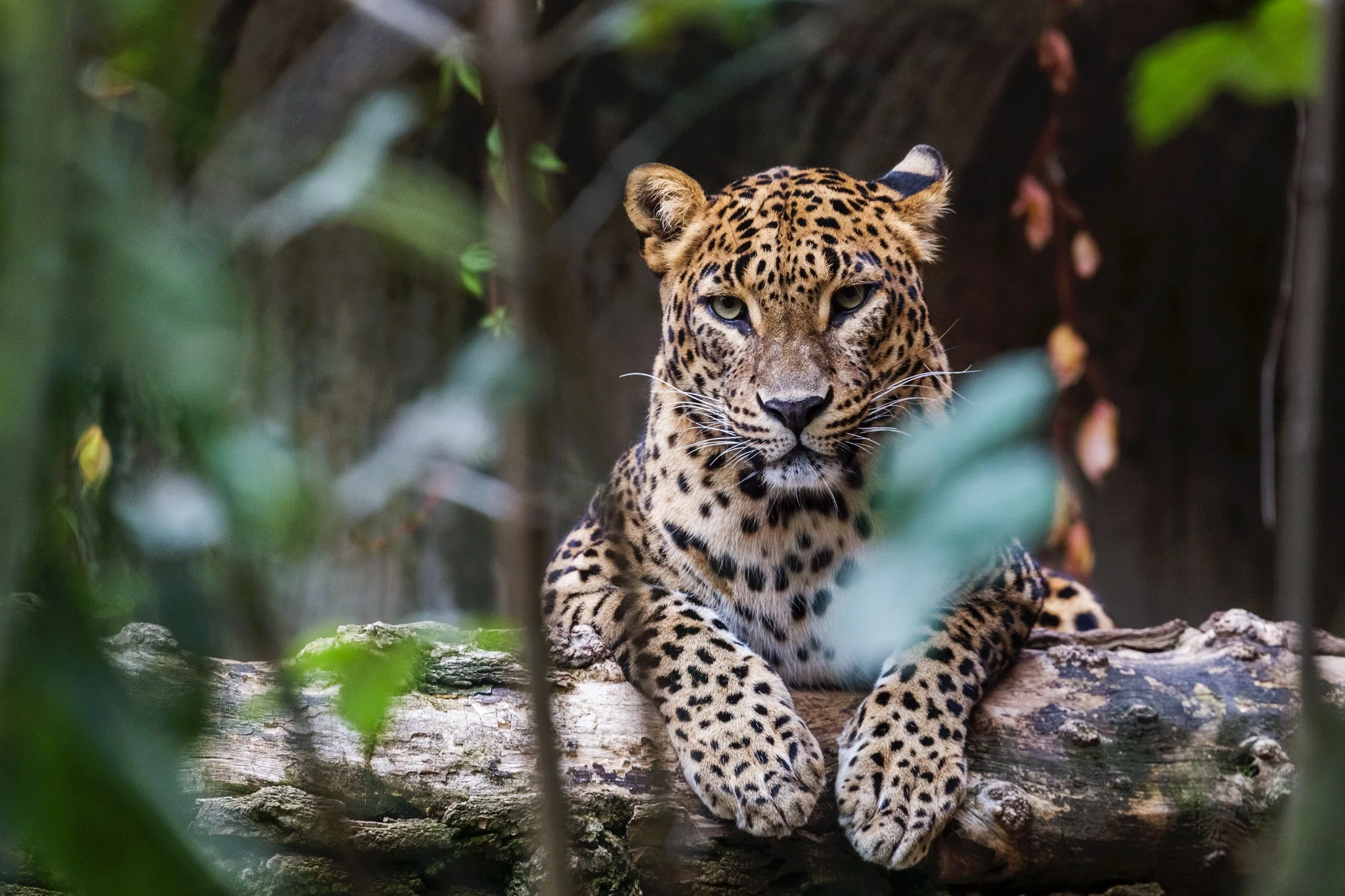
India’s great big-cat expedition moves from tiger country and Rajasthan’s leopard hills to the last wild refuge of the Asiatic lion, then climbs into Ladakh for the winter search for the snow leopard.
Duration24 Nights / 25 Days
RouteDelhi → Agra → Ranthambore → Jaipur → Bera → Gir → Leh → Ulley → Delhi
Four cats, four habitats, one substantial expedition.
The route is designed as a progression rather than a species checklist. Ranthambore introduces the Bengal tiger in dry forest and ancient ruins; Bera reveals leopard coexistence among granite hills and village life; Gir is the last wild home of the Asiatic lion; Ulley demands an entirely different winter tracking mindset.
This is a long, operationally complex journey requiring careful sequencing, realistic buffers and strong naturalists in every region. The snow leopard season determines the dates, while flights, park permits and road sectors are built around that fixed winter window.
02
How the Journey Unfolds
Duration24 Nights / 25 Days
Principal stops7 places
Travel patternRoad · Air
PaceDeliberate, altitude-aware
Chapter 01
Delhi · Agra · Ranthambore
Two principal movements
Roadapprox. 4 hrs
Delhi → Agra
The Taj Mahal and Agra Fort form a cultural opening before tiger country.
Roadvia Abhaneri
Agra → Ranthambore
A meaningful heritage stop breaks the transfer into Rajasthan.
Chapter 02
Ranthambore · Bera · Gir
Two principal movements
Roadvia Jaipur
Ranthambore → Bera
The route shifts from tiger reserve to community leopard landscape.
Road + Airvia Ahmedabad
Bera → Gir
The most practical flight-and-road combination is selected for the travel dates.
Chapter 03
Gir · Leh · Ulley
Two principal movements
Airvia Delhi
Gir → Leh
A planned Delhi buffer protects the transition into winter altitude.
Winter Roadapprox. 3–4 hrs
Leh → Ulley
Acclimatisation precedes the move to snow leopard country.
Chapter 04
Ulley · Delhi
One principal movement
Road + Airvia Leh
Ulley → Delhi
Weather margins are built around the final return.
Pacing note for India Big Cat Safari Exact flight, rail and road timings are reconfirmed for your travel dates, with weather, permits, altitude and local conditions allowed for where relevant.
03
Journey Highlights
01
Tiger in Ranthambore
Repeated drives through dry forest, lakes and ruined architecture.
02
Leopard coexistence in Bera
Explore a granite landscape where leopards and Rabari communities share space.
03
Asiatic lion in Gir
Enter the only remaining wild stronghold of this lion subspecies.
04
Snow leopard in Ladakh
Track the high valleys with local spotters during the winter season.
05
One expedition, different fieldcraft
Jeep safari, community landscape and on-foot mountain tracking demand different ways of seeing.
04
Day-by-Day Itinerary
Chapter 1 — Delhi, Agra & Ranthambore
Day 01
Day 01 — Arrive New Delhi — Gateway to the Expedition
Expedition Briefing
Your Epic Indian Travel representative meets you at Indira Gandhi International Airport and transfers you to your hotel. All travel documents, park permits and a full expedition briefing are provided this evening — covering the wildlife, habitats and logistics of all four big cat destinations. Equipment check and any last-minute preparations. Your guide is available to answer all questions about the itinerary, the national parks and the habitats and species the route is designed to explore.
Delhi — First Evening
As the light softens, the day changes pace. Delhi rewards the curious traveller — the evening offers time to explore the vibrant streets of Connaught Place, sample the extraordinary street food of Chandni Chowk or simply rest after a long international flight. Your guide is on hand to recommend the best local restaurants and evening walks in one of the world's great capitals.
Why This Day Works
For “Arrive New Delhi — Gateway to the Expedition”, the arrival is deliberately light: assistance, transfer and check-in are handled as one sequence, with no compulsory sightseeing added after the flight.
Overnight: Delhi
Day 02
Day 02 — Delhi to Agra — Taj Mahal & Agra Fort
Delhi to Agra
Depart Delhi after breakfast for the four-hour drive south to Agra — 220 km through the flat agricultural plains of Uttar Pradesh, passing through Mathura, the birthplace of Lord Krishna. On arrival in Agra, check in to your hotel before heading out to explore the city's extraordinary Mughal heritage.
About Agra
Agra was the capital of the Mughal Empire at its height — a city of extraordinary monuments, gardens and craftsmanship that defined an era of Indian history. The Taj Mahal — closed on Fridays — will be visited at dawn tomorrow for the most iconic view in India: the white marble mausoleum glowing in the first light of morning.
Why This Day Works
The move described in “Delhi to Agra — Taj Mahal & Agra Fort” is scheduled as part of the experience, with a realistic departure and enough margin for an unhurried arrival.
Overnight: Agra
Day 03
Day 03 — Agra to Ranthambore — Dawn at the Taj, Abhaneri & Into Tiger Country
Dawn at the Taj Mahal
Rise before dawn for the short drive to the Taj Mahal's eastern gate — the best position for the famous sunrise view. The Taj was built by Emperor Shah Jahan in the 17th century for his wife Mumtaz Mahal, blending Persian, Mughal and Hindu architectural traditions. The white marble changes colour with the light — from pale grey at first light to a warm golden glow as the sun rises over the Yamuna River behind it.
About Ranthambore
Ranthambore Tiger Reserve covers 1,411 sq km of rocky ridges, ancient ruins and shimmering lakes in Rajasthan. The thousand-year-old Ranthambore Fort looms over the forest, adding a haunting historical dimension to every safari. Its open lakes, dry forest and ancient structures can create memorable field conditions, but every drive remains shaped by zone allocation, weather and animal movement.
Why This Day Works
For “Agra to Ranthambore — Dawn at the Taj, Abhaneri & Into Tiger Country”, field sessions are balanced with proper recovery time, allowing the naturalist to respond to weather, tracks and park conditions.
Overnight: Ranthambore
Day 04 / 05
Day 04 / 05 — Ranthambore — Full Days of Tiger Safaris
The Safari Rhythm
In the field, the day follows the natural rhythm of the habitat. Each day follows the classic Ranthambore rhythm: an early morning jeep safari departing at dawn, when the park's animals are most active and the light is at its most beautiful for photography. The morning drive typically lasts three to four hours. An afternoon safari departs in the cooler hours of the late afternoon, returning at dusk.
Wildlife Regularly Encountered
The reserve supports Bengal Tiger, Leopard, Sloth Bear, Striped Hyena, Sambar Deer, Nilgai, Chital and Marsh Crocodile. Its varied habitats also support resident and migratory birdlife, including raptors, owls, kingfishers and wetland species. What appears on any drive remains unpredictable.
Why This Day Works
For “Ranthambore — Full Days of Tiger Safaris”, field sessions are balanced with proper recovery time, allowing the naturalist to respond to weather, tracks and park conditions.
Overnight: Ranthambore
Day 06
Day 06 — Ranthambore to Jaipur — The Pink City of Rajasthan
Morning Safari & Departure
Begin in the cooler morning hours. A final morning jeep safari in Ranthambore before checking out and beginning the 180 km drive northwest to Jaipur — approximately three hours through the Aravalli hills. Arrive in Jaipur in time for lunch and an afternoon of exploration at your own pace.
Exploring Jaipur
The afternoon and evening are free to explore Jaipur's extraordinary bazaars — famous for gemstones, block-printed textiles, blue pottery and silver jewellery. Your guide is on hand to recommend the best areas to explore and the finest local restaurants for an evening in the Pink City.
Why This Day Works
The move described in “Ranthambore to Jaipur — The Pink City of Rajasthan” is scheduled as part of the experience, with a realistic departure and enough margin for an unhurried arrival.
Overnight: Ranthambore
Chapter 2 — Bera Leopard Country
Day 07
Day 07 — Jaipur to Bera — Into Leopard Country
Jaipur to Bera
Depart Jaipur after an early breakfast for the 390 km drive southwest to Bera — approximately seven hours through the Aravalli countryside, passing through small towns, camel-dotted plains and the dramatic rocky outcrops of rural Rajasthan. Arrive at the lodge in time for a brief rest before heading out for an evening safari in the rocky landscape around Jawai Dam.
About Bera
Bera is unlike any other wildlife destination in India — not a jungle or a national park, but a working cultural landscape where common leopards live in complete harmony with the local Rabari shepherd community, without conflict. India's first leopard conservation reserve, Bera is also home to 15- foot Marsh Crocodiles, Blue Bull, Striped Hyena, Pelican, Flamingo, Demoiselle Crane and Bar-headed Goose.
Why This Day Works
For “Jaipur to Bera — Into Leopard Country”, field sessions are balanced with proper recovery time, allowing the naturalist to respond to weather, tracks and park conditions.
Overnight: Bera
Day 08 / 09
Day 08 / 09 — Bera — Full Days of Leopard Safaris & Village Life
The Safari Rhythm
In the field, the day follows the natural rhythm of the habitat. Each day follows a morning and afternoon safari pattern — the early morning is the best time to find leopards active on the rocks before the heat of the day, while the late afternoon brings them out again as the temperature drops. Your naturalist positions the vehicle with expert precision, using knowledge of individual leopard territories and behaviour built up over years of working in this landscape.
Wildlife Regularly Encountered
Wildlife may include leopard, marsh crocodile, nilgai, striped hyena, jackal and Indian fox, together with pelicans, cranes, geese and raptors. Bera is known for long-standing coexistence between pastoral communities and leopards, but every drive remains dependent on current animal movement and local conditions.
Why This Day Works
For “Bera — Full Days of Leopard Safaris & Village Life”, field sessions are balanced with proper recovery time, allowing the naturalist to respond to weather, tracks and park conditions.
Overnight: Bera
Day 10 / 11
Day 10 / 11 — Bera to Ahmedabad to Sasan Gir — Last Refuge of the Asiatic Lion
Bera to Ahmedabad (Day 10)
A final morning safari in Bera before checking out and driving 290 km south to Ahmedabad — approximately five to six hours through the Rajasthani and Gujarati countryside. Arrive in Ahmedabad in the evening. The city is Gujarat's largest and a fascinating blend of Mughal and colonial heritage, with a vibrant old city quarter and outstanding street food.
About Sasan Gir
Sasan Gir is the last refuge of the Asiatic lion — a subspecies once found across southwest Asia, now surviving only in this single forest in Gujarat. The park's conservation story is one of the greatest in wildlife history: from fewer than 20 individuals in the early 20th century to over 800 lions today. The park's dry teak and acacia forests also support Leopard, Chinkara, Four-horned Antelope, Marsh Crocodile and over 300 bird species.
Why This Day Works
For “Bera to Ahmedabad to Sasan Gir — Last Refuge of the Asiatic Lion”, field sessions are balanced with proper recovery time, allowing the naturalist to respond to weather, tracks and park conditions.
Overnight: Gir
Chapter 3 — Gir Lion Country
Day 12 / 13
Day 12 / 13 — Sasan Gir — Full Days with the Asiatic Lion
The Safari Rhythm
In the field, the day follows the natural rhythm of the habitat. Each day follows a morning and afternoon jeep safari pattern — the early morning is the best time to find lions active before the heat of the day, while the late afternoon brings them out again as the temperature drops. Your expert naturalist guides you through the park's best zones for lion sightings, drawing on deep knowledge of individual pride territories and seasonal movement patterns.
Wildlife Regularly Encountered
The Asiatic Lion is Gir's defining species, alongside Leopard, Chinkara, Nilgai, Chital, Sambar, Four-horned Antelope and Marsh Crocodile. The dry forest and grassland mosaic also supports raptors, coursers, rollers, cranes and seasonal birdlife. Sightings depend on habitat, weather and movement on the day.
Why This Day Works
For “Sasan Gir — Full Days with the Asiatic Lion”, field sessions are balanced with proper recovery time, allowing the naturalist to respond to weather, tracks and park conditions.
Overnight: Gir
Day 14
Day 14 — Gir to Rajkot to Delhi — Farewell to the Lions
Final Safari & Departure
In the field, the day follows the natural rhythm of the habitat. A last morning jeep safari in Gir — one final opportunity to encounter the Asiatic lion before checking out and driving 180 km to Rajkot Airport. Catch an internal flight from Rajkot to New Delhi. On arrival, your Epic Indian Travel representative meets you at the airport and transfers you to your hotel.
Looking Ahead — Ladakh
The second chapter of the expedition takes you to the high Trans-Himalayas of Ladakh — one of the most dramatic and remote landscapes on earth, and home to the Snow Leopard, Tibetan Wolf, Ladakh Urial and Asiatic Ibex. Ulley, your base for the Snow Leopard search, sits at over 4,000 metres above sea level — a world of frozen cliffs, vast silence and extraordinary wildlife.
Why This Day Works
For “Gir to Rajkot to Delhi — Farewell to the Lions”, field sessions are balanced with proper recovery time, allowing the naturalist to respond to weather, tracks and park conditions.
Overnight: Delhi
Day 15
Day 15 — Delhi to Leh — Arrival in the High Himalayas
Delhi to Leh
An early morning flight from Delhi to Leh — approximately one hour, with extraordinary aerial views of the Himalayan peaks. Leh's airport is a military facility; photography is not permitted on arrival. Your representative transfers you to your hotel — just 30 minutes from the airport — where the first day is dedicated entirely to rest and acclimatisation.
About Leh & Ladakh
Leh is the capital of Ladakh — a high-altitude desert region in the western Himalayas, bordered by Tibet to the east and Pakistan to the west. Its culture is deeply Tibetan Buddhist, with ancient monasteries, prayer flags and whitewashed chortens dotting the landscape. The Indus River flows through the valley below Leh, and the surrounding mountains rise to over 6,000 metres — a landscape of extraordinary scale and beauty.
Why This Day Works
For “Delhi to Leh — Arrival in the High Himalayas”, the arrival is deliberately light: assistance, transfer and check-in are handled as one sequence, with no compulsory sightseeing added after the flight.
Overnight: Leh
Day 16
Day 16 — Leh — Culture, Monasteries & Birdwatching on the Indus
Thiksey Monastery
Thiksey Monastery is the largest monastery in Leh — its tiered white buildings rise dramatically above the Indus Valley in a striking resemblance to the Potala Palace in Lhasa, Tibet. The monastery's halls and courtyards are filled with Tibetan Buddhist art, ancient thangkas, butter lamps and the scent of juniper incense. Entrance fees are included in your expedition package.
Leh Market & Evening
As the light softens, the day changes pace. The evening is free to explore Leh's market — a fascinating blend of Ladakhi, Tibetan and Central Asian culture, with stalls selling handmade jewellery, pashmina shawls, Buddhist artefacts and local produce. Your guide is on hand to recommend the best local restaurants and tea houses for an evening in this remarkable high-altitude city.
Why This Day Works
“Leh — Culture, Monasteries & Birdwatching on the Indus” is kept focused on one principal experience, with the surrounding hours left adaptable to access, weather and guest energy.
Overnight: Leh
Chapter 4 — Ladakh & Ulley
Day 17
Day 17 — Leh to Ulley — Into Snow Leopard Territory
Leh to Ulley
Depart Leh after a leisurely breakfast for the two-and-a-half-hour drive to Ulley. The route passes through the spectacular Sangam — where the turquoise Zanskar River meets the grey-green Indus — one of the most photogenic spots in Ladakh. The road climbs steadily into the Trans-Himalayan landscape, passing through Ladakhi villages and military bases before reaching the lodge at Ulley.
About Ulley & the Snow Leopard
Ulley is a small high-altitude settlement surrounded by cliffs, scree slopes and valleys used by snow leopard and their prey. Local trackers build knowledge over many seasons by reading movement, weather and recent signs, yet the animal’s camouflage and vast territory make every search uncertain. The strength of the stay is sustained field time with an experienced team, not a guaranteed encounter.
Why This Day Works
For “Leh to Ulley — Into Snow Leopard Territory”, field sessions are balanced with proper recovery time, allowing the naturalist to respond to weather, tracks and park conditions.
Overnight: Ulley
Day 18 / 19 / 20 / 21 / 22
Day 18 / 19 / 20 / 21 / 22 — Ulley — Five Days on the Snow Leopard Trail
The Daily Search
Each morning, the trackers are out before first light, scanning the vast cliffs of Ulley and the neighbouring settlements of Saspoche and Hemis Shukpachen with spotting scopes. When a snow leopard is located, the team moves immediately to the best viewing position. Sometimes the viewing point is roadside; sometimes it requires a short hike across the frozen terrain. Get ready to do some hiking — and to be rewarded with one of the most extraordinary wildlife encounters on earth.
Beyond the Snow Leopard
A small pack of five to eight Tibetan Wolves roams the valleys between Saspoche and Hemis Shukpachen — one of the most exciting additional wildlife encounters of the expedition. Ladakh Urial and Asiatic Ibex pick their way across the frozen ridgelines. Golden Eagle and Lammergeier (Bearded Vulture, wingspan up to 2.83 metres) patrol the thermals overhead. Himalayan Snowcock, Chukar Pheasant, Red-billed Chough and Robin Accentor add colour to the frozen landscape.
Why This Day Works
For “Ulley — Five Days on the Snow Leopard Trail”, field sessions are balanced with proper recovery time, allowing the naturalist to respond to weather, tracks and park conditions.
Overnight: Ulley
Day 23
Day 23 — Ulley to Leh — Farewell to the Snow Leopard
Last Morning in Ulley
Last Morning in Ulley is approached as part of Ulley to Leh — Farewell to the Snow Leopard. The guide adjusts the sequence to access, weather and the amount of time guests wish to spend at the principal stop.
Leh — Final Evening in Ladakh
As the light softens, the day changes pace. Leh's market is a treasure trove of Ladakhi crafts, Tibetan jewellery, pashmina shawls and Buddhist artefacts — a perfect place to find souvenirs of the expedition. The evening is free to explore at your own pace — a final taste of this remarkable high-altitude culture before tomorrow's flight back to Delhi.
Why This Day Works
For “Ulley to Leh — Farewell to the Snow Leopard”, field sessions are balanced with proper recovery time, allowing the naturalist to respond to weather, tracks and park conditions.
Overnight: Leh
Day 24
Day 24 — Leh to Delhi — Return from the Himalayas
Leh to Delhi
A leisurely morning in Leh before transferring to the airport for the flight back to New Delhi — approximately one hour, with extraordinary aerial views of the Himalayan peaks on departure. On arrival in Delhi, your Epic Indian Travel representative meets you at the airport and transfers you to your hotel for a final night in India.
Looking Back
The Big Cats of India Expedition has taken you to four of India's most extraordinary wildlife destinations — each one unique in its landscape, its wildlife and its atmosphere. The memories of these encounters — the tiger in the ruins, the leopard on the rock, the lion in the teak forest, the Snow Leopard on the frozen cliff — will stay with you for a lifetime.
Why This Day Works
The move described in “Leh to Delhi — Return from the Himalayas” is scheduled as part of the experience, with a realistic departure and enough margin for an unhurried arrival.
Overnight: Delhi
Chapter 5 — Return
Day 25
Day 25 — Delhi — Fly Home
Departure
The final movement is kept unhurried. After a leisurely breakfast, check out of your hotel and transfer to Indira Gandhi International Airport. Your Epic Indian Travel representative accompanies you to the airport and assists with check-in. Departure times vary — your representative will ensure you arrive at the airport with plenty of time for your international flight home.
Extend Your Expedition
Your Big Cats of India Expedition can be extended to include Kaziranga National Park for the Greater One-Horned Rhinoceros and Asian Elephant, Bharatpur Bird Sanctuary, or the Golden Triangle cultural circuit. Speak to your Epic Indian Travel representative about combining this expedition with other India wildlife or cultural experiences.
Why This Day Works
For “Delhi — Fly Home”, the closing day protects the flight connection with a realistic transfer margin and no unnecessary programme added before departure.
Departure / onward journey
05
The Character of Your Stay
01
Distinctive Safari Lodges
Each forest base is chosen for habitat, naturalists, park access and the ability to recover between demanding field days.
02
A Quiet Leh Residence
Warmth, attentive service and a gentle setting allow the body to acclimatise before the expedition chapter.
03
Expedition-Ready Mountain Base
Remote winter accommodation is assessed for heating, safety, local field operations and responsible community relationships.
Hotel names and room categories for India Big Cat Safari are confirmed after your dates, preferred character, budget and current availability are understood.
06
Customise This Journey
Pace
Adjust India Big Cat Safari with an extra recovery night, a shorter road day or a gentler start where the route and your energy benefit.
Stay Mood
For India Big Cat Safari, choose among the stay characters described above, then set room category and service level around how you expect to use the hotel.
Experience Depth
For India Big Cat Safari, deepen the fieldwork with a private vehicle where permitted, a photography mentor, birding time or additional drives in the strongest habitat.
Season & Operations
For India Big Cat Safari, for January to March for the complete route; plains parks remain seasonal and permit dependent, we refine sightseeing hours, transfer starts and access around heat, rain, winter conditions, crowds and local operating days.
07
Private Refinement
Epic Indian Travel Concierge
Shape this journey privately.
Tell us which chapter of India Big Cat Safari matters most and where you would prefer more time, privacy or specialist depth.