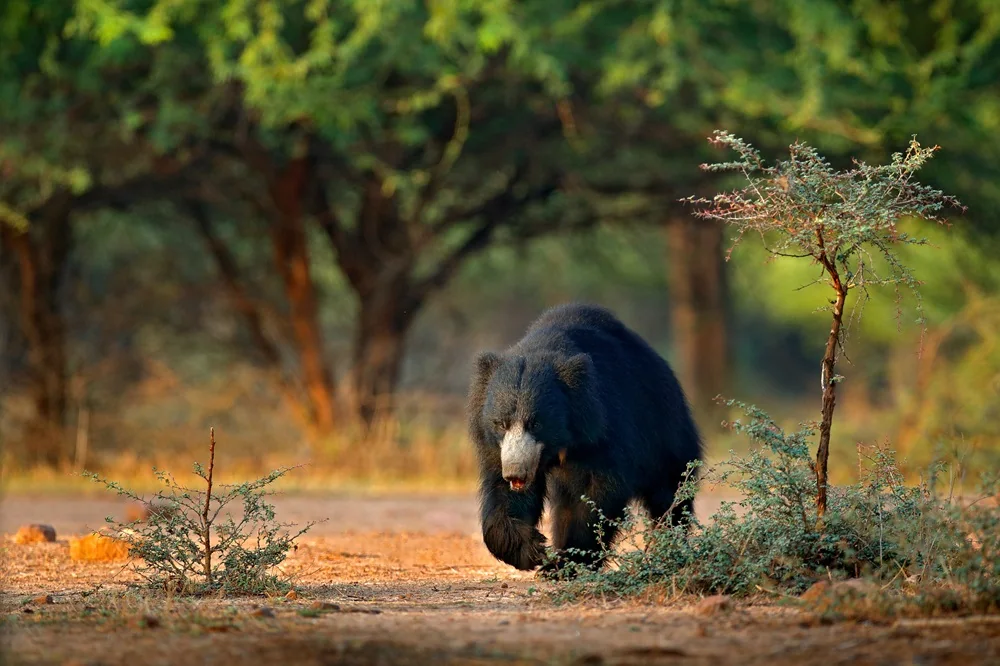
A less conventional Central India safari through Tadoba, Pench and Satpura, combining strong tiger habitat with quieter reserves and a wider range of ways to enter the landscape.
This route moves away from the best-known Bandhavgarh–Kanha pairing and into three reserves with distinct personalities. Tadoba offers concentrated waterhole country, Pench brings teak forest and the Jungle Book landscape, while Satpura broadens the safari language through canoeing, walking and buffer-zone exploration.
The journey suits travellers who value variety and fieldcraft over a checklist. Safari permits, gate zones and activity types are confirmed around the actual dates, park regulations and natural conditions.
02
How the Journey Unfolds
Duration12 Nights / 13 Days
Principal stops5 places
Travel patternAir · Road
PaceUnhurried
Chapter 01
Delhi · Nagpur · Tadoba
Two principal movements
Airapprox. 2 hrs
Delhi → Nagpur
The flight provides the cleanest entry into Maharashtra tiger country.
Roadapprox. 3 hrs
Nagpur → Tadoba
A manageable transfer reaches the first lodge in time for orientation.
Chapter 02
Tadoba · Pench · Satpura
Two principal movements
Roadapprox. 4–5 hrs
Tadoba → Pench
The route links Maharashtra’s waterhole habitat with Pench’s teak forest.
Roadfull transfer day
Pench → Satpura
A longer movement is paced with comfort stops and an unhurried arrival.
Chapter 03
Satpura · Nagpur
One principal movement
Road + Airtimed to onward flight
Satpura → Nagpur
The final drive is planned around the last field activity and flight schedule.
Pacing note for Offbeat Tiger Country Exact flight, rail and road timings are reconfirmed for your travel dates, with weather, permits, altitude and local conditions allowed for where relevant.
03
Journey Highlights
01
Tadoba waterhole country
Dawn and afternoon drives through one of Maharashtra’s most productive tiger landscapes.
02
Pench beyond the storybook
Read the teak forest through tracks, alarm calls, dhole and the Pench River system.
03
Satpura in several dimensions
Use jeep, canoe and walking experiences where regulations and conditions permit.
A route designed for guests who value quieter interpretation and varied field methods.
04
Day-by-Day Itinerary
Chapter 1 — Delhi & Orientation
Day 01
Day 01 — Arrive Delhi — Gateway to the Jungle
The Day Unfolds
Delhi — India's ancient and modern capital — is the starting point for your offbeat Central India tiger safari. Your Epic Indian Travel representative meets you on arrival at Indira Gandhi International Airport and transfers you to your hotel in the heart of the city. The evening is yours to rest, recover from your journey and begin absorbing the extraordinary energy of one of the world's great capitals.
Welcome Briefing
On arrival, the practical details are handled quietly. Your naturalist guide joins you for a welcome dinner and a detailed briefing on the three reserves you will visit — Tadoba, Pench and Satpura — covering their landscapes, wildlife, safari zones and what to expect at each destination. Equipment check and any last-minute preparations for the safari ahead. Your guide is available to answer all questions about the itinerary, the parks and the wildlife you are likely to encounter.
Delhi — First Impressions
Even on arrival day, Delhi makes an impression — the scale, the colour, the noise and the history of this 3,000-year-old city are immediately apparent. If time and energy permit, an evening walk in one of Delhi's historic neighbourhoods offers a vivid introduction to India. Tomorrow brings a full day to explore Delhi's extraordinary monuments before the flight south to Nagpur and the jungle.
Why This Day Works
At the start of Offbeat Tiger Country, assistance, the private transfer and check-in are handled as one sequence, with no compulsory sightseeing added after the flight.
Overnight: Delhi
Day 02
Day 02 — Delhi — Monuments, Markets & Safari Briefing
The Day Unfolds
A full day in Delhi — part sightseeing, part preparation. Delhi's UNESCO World Heritage monuments offer extraordinary subjects for the curious traveller: the geometric perfection of Humayun's Tomb, the soaring minaret of Qutb Minar, the vast Mughal grandeur of the Red Fort and the living chaos of Chandni Chowk market. In the afternoon, a final safari briefing and equipment check before tomorrow's early flight to Nagpur.
Morning — Mughal Delhi
Begin in the cooler morning hours. Humayun's Tomb — the architectural precursor to the Taj Mahal — set in formal Mughal gardens and one of Delhi's most photogenic monuments. Continue to Qutb Minar, the world's tallest brick minaret, surrounded by the ruins of Delhi's earliest Islamic monuments. Lunch in one of Delhi's excellent restaurants — your guide will recommend the best options for authentic Delhi cuisine, from Old Delhi's legendary street food to the city's finest regional restaurants.
Afternoon — Markets & Briefing
Later, the focus shifts. An afternoon in Chandni Chowk — Old Delhi's extraordinary bazaar district, a labyrinth of narrow lanes, spice markets, textile shops and street food stalls that has changed little in 400 years. Final safari briefing: camera settings, clothing, what to bring on safari, lodge facilities and the wildlife you are most likely to encounter at Tadoba, Pench and Satpura.
Why This Day Works
For “Delhi — Monuments, Markets & Safari Briefing”, field sessions are balanced with proper recovery time, allowing the naturalist to respond to weather, tracks and park conditions.
Overnight: Delhi
Chapter 2 — Tadoba
Day 03
Day 03 — Fly Delhi to Nagpur — Drive to Tadoba Tiger Reserve
The Day Unfolds
An early morning flight from Delhi's Indira Gandhi International Airport to Nagpur — the "Orange City" of Maharashtra and the gateway to Central India's offbeat tiger circuit. The flight takes approximately 1.5 hours, and on landing your driver and naturalist guide are waiting to begin the 3-hour drive east to Tadoba-Andhari Tiger Reserve — Maharashtra's oldest and finest national park.
The Drive to Tadoba
The drive from Nagpur to Tadoba passes through the flat agricultural plains of Vidarbha — Maharashtra's eastern heartland — before the landscape shifts to dry teak and bamboo forest as the reserve boundary approaches. The air changes, the road narrows and the jungle begins. Tadoba-Andhari Tiger Reserve is a landscape of dry deciduous forest, bamboo groves, open grasslands and water systems around Tadoba Lake. These habitats support tiger, leopard, dhole, sloth bear, gaur and varied birdlife. Repeated drives create time to understand the reserve, but no encounter is predictable.
Arrive & Afternoon Safari
Check in at the lodge near Tadoba and prepare for the first drive. The afternoon introduces teak, bamboo, lake-edge habitat and the reserve’s wider wildlife community as the heat begins to soften. Water can influence animal movement in the dry season, but the naturalist treats the drive as an open search rather than a promised sighting.
Why This Day Works
For “Fly Delhi to Nagpur — Drive to Tadoba Tiger Reserve”, field sessions are balanced with proper recovery time, allowing the naturalist to respond to weather, tracks and park conditions.
Overnight: Tadoba
Day 04
Day 04 — Tadoba — Second Full Day Safaris — Kolsa & Buffer Zones
The Day Unfolds
A second full day in Tadoba opens up the reserve's lesser-explored zones — the Kolsa range and the buffer areas that border the core zone. These areas offer a different character to the Tadoba and Moharli zones — denser forest, quieter tracks and the chance to encounter wildlife away from the main safari circuits. Leopards, Sloth Bears and Indian Wild Dogs are particularly active in these areas.
Morning safari
Begin in the cooler morning hours. The Kolsa zone in the southern part of the reserve is one of Tadoba's most scenic areas — a landscape of rolling hills, dense teak forest and rocky outcrops that provide ideal habitat for Leopard and Sloth Bear. Tiger sightings here are less frequent but often more dramatic, with cats moving through open terrain between forest patches. The buffer zone tracks offer excellent birding — Grey Junglefowl, Painted Sandgrouse, Indian Scimitar Babbler and Red Spurfowl are regularly encountered along the forest edges.
Afternoon safari
Later, the focus shifts. A return to the core zone for the afternoon drive — the Tadoba Lake area in the late afternoon light is one of the reserve's most rewarding experiences, with tigers, Gaur and Sambar frequently seen at the water's edge as the sun drops behind the forest.
Why This Day Works
For “Tadoba — Second Full Day Safaris — Kolsa & Buffer Zones”, field sessions are balanced with proper recovery time, allowing the naturalist to respond to weather, tracks and park conditions.
Overnight: Tadoba
Day 05
Day 05 — Tadoba — Final Safaris & Drive to Pench Tiger Reserve
The Day Unfolds
Tadoba — Final Safaris & Drive to Pench Tiger Reserve is planned around the natural rhythm of the habitat. Field time is balanced with a proper rest interval, while the naturalist adapts the route to weather, tracks and current park conditions; wildlife encounters can never be guaranteed.
Morning safari
Begin in the cooler morning hours. A final game drive in Tadoba — often the most productive, as animals are active and the forest is at its most atmospheric in the early light. Depart after breakfast for the drive to Pench. Pench Tiger Reserve straddles the border of Madhya Pradesh and Maharashtra and holds a legendary place in the natural history of Central India. It was the landscape that inspired Rudyard Kipling's Jungle Book — the forests of Seeonee where Mowgli, Baloo and Shere Khan came to life. The reserve is named after the Pench River, which flows through its heart, creating a ribbon of riparian habitat that attracts extraordinary concentrations of wildlife.
Afternoon arrival
Later, the focus shifts. Arrive Pench in the late afternoon. Check in to your lodge and join your naturalist guide for an evening briefing on the reserve's zones, wildlife and safari strategy for the following days. Tadoba to Pench — approximately 5 hours.
Why This Day Works
For “Tadoba — Final Safaris & Drive to Pench Tiger Reserve”, field sessions are balanced with proper recovery time, allowing the naturalist to respond to weather, tracks and park conditions.
Overnight: Pench
Chapter 3 — Pench
Day 06
Day 06 — Pench — First Full Day Safaris — The Jungle Book Landscape
The Day Unfolds
Pench is a revelation — a landscape of mixed teak forest, open grasslands and the winding Pench River that feels both wild and deeply familiar to anyone who has read Kipling's Jungle Book. The reserve's prey base supports tiger, leopard and dhole, while the river, grasslands and teak forest create varied field conditions across the day. Two full game drives today explore the heart of this legendary reserve.
Morning safari
Begin in the cooler morning hours. Enter the core zone at dawn — the Pench River corridor is the most productive area, with tigers, leopards and dholes frequently seen along the riverbanks and in the open grasslands. The high herbivore density — Spotted Deer, Sambar, Nilgai, Wild Boar and Gaur — means predator activity is constant and sightings are frequent. Pench's birdlife is equally outstanding. The reserve is home to over 285 species, including the Indian Pitta, Crested Serpent Eagle, Changeable Hawk-Eagle, Indian Roller and numerous kingfishers along the river. The open forest structure makes birding from the safari vehicle exceptionally rewarding.
Afternoon safari
Later, the focus shifts. A second drive into a different zone — exploring the buffer areas and the Turia Gate sector, where tiger sightings have been particularly consistent in recent seasons.
Why This Day Works
For “Pench — First Full Day Safaris — The Jungle Book Landscape”, field sessions are balanced with proper recovery time, allowing the naturalist to respond to weather, tracks and park conditions.
Overnight: Pench
Day 07
Day 07 — Pench — Second Full Day Safaris — Turia Gate & River Corridor
The Day Unfolds
A second full day in Pench — exploring the reserve's northern sectors and the Turia Gate area, which has produced some of the most consistent tiger sightings in recent seasons. The Pench River corridor remains the heart of the reserve, drawing wildlife to its banks throughout the day and offering superb opportunities for watching predator-prey interactions in open terrain.
Morning safari
Explore Pench’s mix of grassland, teak forest and river corridor at first light. Wild dogs are an important part of this ecosystem, although pack movement can be wide-ranging and unpredictable. Sambar, spotted deer, crocodile, raptors and smaller forest species provide a strong supporting cast while the naturalist follows fresh signs.
Afternoon safari
Return to the core zone as the temperature falls and forest activity begins to change. The naturalist follows tracks, alarm calls and current information while allowing time for deer, gaur, birds and smaller species. A tiger may use the main track, but the session is never described as predictable or routine.
Why This Day Works
For “Pench — Second Full Day Safaris — Turia Gate & River Corridor”, field sessions are balanced with proper recovery time, allowing the naturalist to respond to weather, tracks and park conditions.
Overnight: Pench
Day 08
Day 08 — Pench — Final Safaris & Drive to Satpura Tiger Reserve
The Day Unfolds
The final morning in Pench — one last dawn safari into the core zone before checking out and beginning the 7-hour drive west to Satpura Tiger Reserve. The drive passes through scenic Madhya Pradesh countryside — small towns, agricultural plains and the rising Satpura hills — before the forest closes in around the Denwa backwaters and the lodge comes into view.
Morning safari
Begin in the cooler morning hours. A final game drive in Pench — approached with the benefit of three days spent learning the reserve's habitats, tracks and changing activity. Depart after breakfast for the drive to Satpura. Satpura Tiger Reserve is one of India's most distinctive wildlife destinations — a landscape of rugged sandstone hills, sal and teak forest, and the Denwa River backwaters. Its mix of vehicle, canoe and—where permitted—walking experiences gives the Central India circuit a different final chapter.
Arrive Satpura
Arrive at your eco lodge on the Denwa backwaters in the late afternoon. The lodge setting — surrounded by forest with views across the reservoir to the hills — is one of the most atmospheric in Central India. Evening briefing with your naturalist guide on Satpura's zones, wildlife and the multi-mode safari programme. Pench to Satpura — approximately 7 hours.
Why This Day Works
For “Pench — Final Safaris & Drive to Satpura Tiger Reserve”, field sessions are balanced with proper recovery time, allowing the naturalist to respond to weather, tracks and park conditions.
Overnight: Satpura
Chapter 4 — Satpura
Day 09
Day 09 — Satpura — First Full Day — Jeep Safari & Canoe on the Denwa
The Day Unfolds
Satpura is unlike any other tiger reserve in India. Here, the safari experience extends beyond the open 4WD vehicle to include canoe safaris on the Denwa River backwaters and guided walking safaris through pristine forest — a multi-sensory immersion in the wilderness that transforms the way you experience wildlife. Today combines a morning jeep safari with an afternoon canoe on the Denwa.
Morning jeep safari
Begin in the cooler morning hours. Enter the core zone at dawn in an open 4WD vehicle — Satpura's rugged sandstone terrain, dense sal forest and rocky outcrops create a landscape that feels ancient and untouched. Tiger, Leopard, Sloth Bear and Gaur are the headline species, but the reserve is equally celebrated for its Wolf population and the rare Rusty Spotted Cat. The forest is rich with birdlife — Indian Skimmer, Black-bellied Tern, White-naped Woodpecker, Malabar Pied Hornbill and Crested Treeswift are among the notable species that may be recorded across this varied Central Indian habitat.
Afternoon canoe safari
Later, the focus shifts. A canoe safari on the Denwa River backwaters — gliding silently through the water with the forest rising on both banks. Mugger Crocodiles, Smooth-coated Otters, Indian Skimmers and a wealth of waterbirds are encountered at close range from the canoe. The silence and intimacy of this experience is extraordinary.
Why This Day Works
For “Satpura — First Full Day — Jeep Safari & Canoe on the Denwa”, field sessions are balanced with proper recovery time, allowing the naturalist to respond to weather, tracks and park conditions.
Overnight: Satpura
Day 10
Day 10 — Satpura — Walking Safari & Night Drive in the Buffer Zone
The Day Unfolds
Day eleven brings Satpura's most exclusive experience — a guided walking safari through the forest. Walking in tiger country is a privilege available in very few Indian reserves, and Satpura is one of the finest destinations for this activity. Led by an expert naturalist and armed forest guard, the walk reveals the forest at a pace and intimacy impossible from a vehicle.
Morning walking safari
Begin in the cooler morning hours. The walking safari begins at dawn — entering the forest on foot, tracking pugmarks, reading the landscape and experiencing the jungle through all the senses. Smaller mammals, reptiles, insects and birds that are invisible from a vehicle become the focus — the forest floor reveals a world of extraordinary detail. Encounters with large mammals on foot — Gaur, Sambar, Spotted Deer and occasionally Sloth Bear — are thrilling and humbling in equal measure. The naturalist guide reads the forest with expert precision, maintaining safety while helping guests notice tracks, calls, plants and smaller forms of forest life.
Evening night drive
As the light softens, the day changes pace. Satpura's buffer zone permits night drives — a rare opportunity in Indian wildlife tourism. After dinner, a spotlight drive through the buffer tracks offers the chance to encounter nocturnal species: Striped Hyena, Jungle Cat, Rusty Spotted Cat, Small Indian Civet, Common Mongoose and the elusive Honey Badger.
Why This Day Works
For “Satpura — Walking Safari & Night Drive in the Buffer Zone”, field sessions are balanced with proper recovery time, allowing the naturalist to respond to weather, tracks and park conditions.
Overnight: Satpura
Day 11 / 12
Day 11 / 12 — Satpura — Final Safari & Drive to Nagpur — Fly Delhi / Home
The Day Unfolds
Satpura — Final Safari & Drive to Nagpur — Fly Delhi / Home is planned around the natural rhythm of the habitat. Field time is balanced with a proper rest interval, while the naturalist adapts the route to weather, tracks and current park conditions; wildlife encounters can never be guaranteed.
Final morning safari
Begin in the cooler morning hours. The last game drive of the safari — by now, three days in Satpura have revealed the reserve's rhythms, its wildlife and its extraordinary character. The morning light over the Denwa backwaters, the sound of the forest awakening and the uncertainty of one final field session make this last drive as attentive as the first. Depart after breakfast for the drive to Nagpur — approximately 5–6 hours through scenic countryside. Arrive Nagpur in the early afternoon for your flight to Delhi.
Fly Delhi / Home
Fly from Nagpur to Delhi for onward international connections, or spend a final night in Delhi before flying home. Your Epic Indian Travel representative will assist with all onward arrangements. This safari can be combined with Corbett, Ranthambore, Kaziranga or other parks. Write to us for a detailed itinerary, quote or to customise this tour. Satpura to Nagpur — approximately 5–6 hours.
Why This Day Works
For “Satpura — Final Safari & Drive to Nagpur — Fly Delhi / Home”, field sessions are balanced with proper recovery time, allowing the naturalist to respond to weather, tracks and park conditions.
Overnight: Delhi
05
The Character of Your Stay
01
Tadoba Lodge
Select around gate allocation and naturalist strength rather than decorative luxury alone.
02
Pench Retreat
Use a calm forest base that supports recovery between repeated drives.
03
Satpura Character
Prioritise lodges with genuine access to canoeing, walking and buffer activities.
Hotel names and room categories for Offbeat Tiger Country are confirmed after your dates, preferred character, budget and current availability are understood.
06
Customise This Journey
Pace
Adjust Offbeat Tiger Country with an extra recovery night, a shorter road day or a gentler start where the route and your energy benefit.
Stay Mood
For Offbeat Tiger Country, choose among the stay characters described above, then set room category and service level around how you expect to use the hotel.
Experience Depth
For Offbeat Tiger Country, deepen the fieldwork with a private vehicle where permitted, a photography mentor, birding time or additional drives in the strongest habitat.
Season & Operations
For Offbeat Tiger Country, for October to April; the dry months improve visibility around water, we refine sightseeing hours, transfer starts and access around heat, rain, winter conditions, crowds and local operating days.
07
Private Refinement
Epic Indian Travel Concierge
Shape this journey privately.
Tell us which chapter of Offbeat Tiger Country matters most and where you would prefer more time, privacy or specialist depth.