
Delhi · Agra · Karauli
Two principal movements
Railapprox. 1 hr 40 min
Delhi Agra
Fast rail avoids traffic and adds an authentic mode of travel.
Roadvia Fatehpur Sikri
Agra Karauli
The heritage stop makes the road purposeful.
India Wildlife Tours · Private Dossier
Villages · Palaces · Tigers
A compact first safari journey combining Delhi and the Taj Mahal with a palace stay in rural Karauli, meaningful village encounters and three drives in Ranthambore’s dry forest.
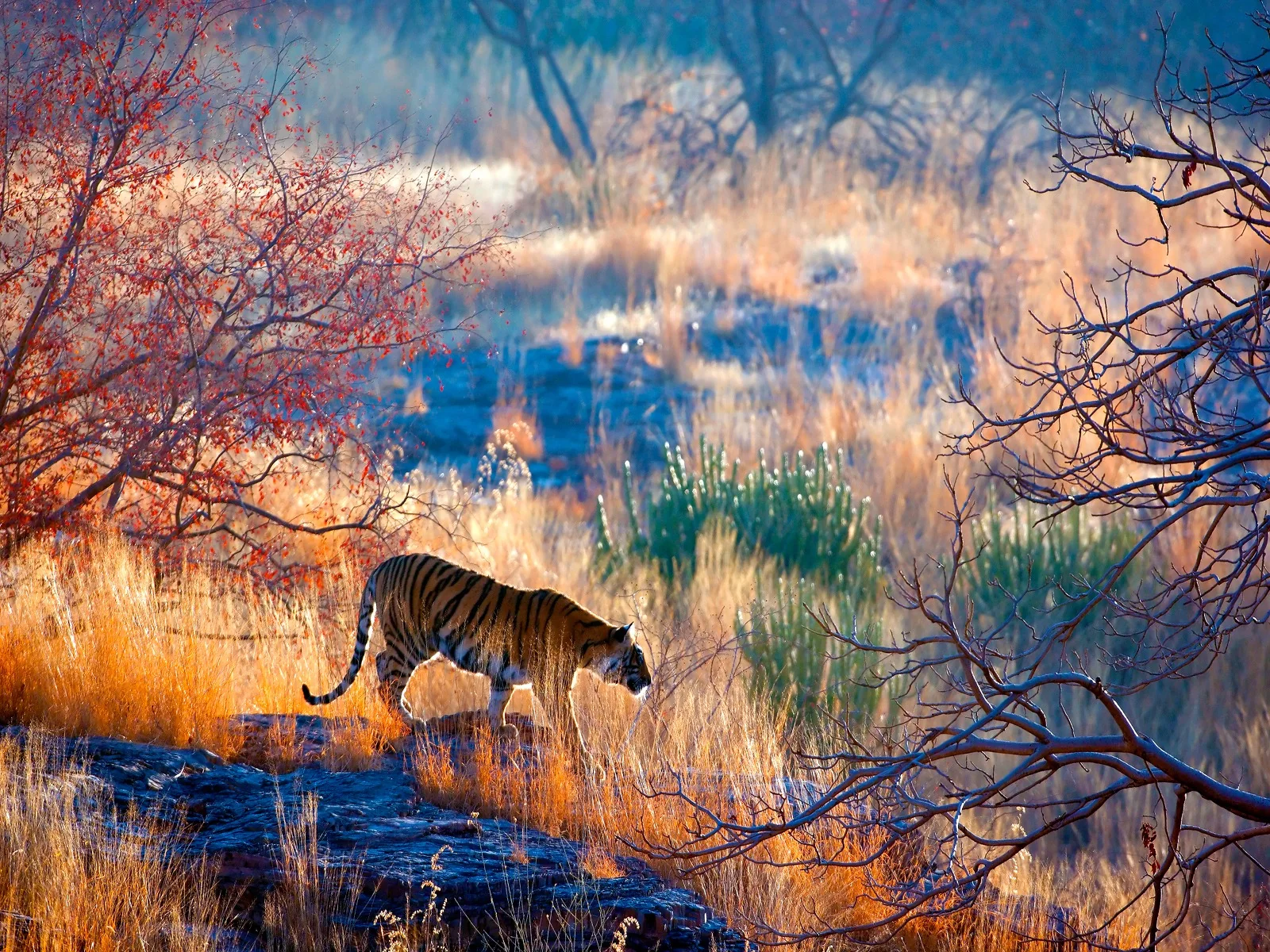
This itinerary uses the Golden Triangle as a cultural frame, then inserts two experiences that change the character of the route: a palace and village stay in Karauli, and a two-night safari chapter in Ranthambore. The result is more varied than a monument-only journey, but still short enough for a first visit.
Tiger sightings remain entirely wild and can never be promised. The quality of the journey therefore depends on realistic expectations, strong naturalists, good permit planning and enough time to appreciate the whole ecosystem.
Two principal movements
Fast rail avoids traffic and adds an authentic mode of travel.
The heritage stop makes the road purposeful.
Two principal movements
A shorter transfer leaves room for village time or a first safari.
A craft or heritage stop can soften the transition.
One principal movement
Departure timing is designed around the flight; a Delhi night is often wiser.
Pacing note for Ranthambore Villages, Palaces & Tigers Exact flight, rail and road timings are reconfirmed for your travel dates, with weather, permits, altitude and local conditions allowed for where relevant.
Begin the intercity journey by train, then explore Mughal Agra with a private guide.
A palace stay, village walk and local interaction reveal a quieter Rajasthan.
Use morning and afternoon drives to experience different park zones and light.
Track tigers, but also understand deer, crocodiles, birdlife, habitat and conservation.
Close with Amer Fort, the royal city, craft and family hospitality.
After baggage collection, your Delhi host meets you and confirms the practical details for the Ranthambore, villages and palaces journey, including luggage handling and the first departure towards rural Rajasthan and tiger country.
Transfer privately to a calm New Delhi hotel. The drive is intentionally left unscripted, allowing Delhi to register as an arrival rather than a compressed sightseeing session.
After check-in, the remainder of the day is protected for sleep and adjustment. A short walk through nearby gardens is added only when the flight timing and your energy support it.
The opening day is intentionally light, leaving you rested for Delhi before the route opens into monuments, village life and tiger country.
Delhi
Begin at Lodhi Garden, Humayun’s Tomb and Qutub Minar, using Delhi’s gardens and dynastic architecture to introduce the movement from capital avenues to village roads, forts and forest.
Cross from New Delhi’s avenues into Shahjahanabad by cycle rickshaw, linking Jama Masjid, Gurudwara Sis Ganj Sahib and Chandni Chowk to the movement from capital avenues to village roads, forts and forest.
Return to the hotel after the old city, or use the remaining energy for an early dinner before the route turns towards Rajasthan; the decision is kept flexible until the day itself.
The day establishes the historical depth that gives context to the contrast between imperial India, rural Rajasthan and the forest.
Delhi
Transfer to the station for the Gatimaan Express or the best suitable fast train, with tickets and assistance confirmed in advance.
Meet your guide in Agra and explore the fort’s red sandstone courts and later marble apartments.
Continue to Itimad-ud-Daulah and Mehtab Bagh for a first view of the Taj Mahal across the Yamuna.
Rail avoids road traffic and gives the journey a distinctly Indian mode of movement without compromising comfort.
Agra
Enter before the heat and crowds, seeing the marble change with the first light.
After breakfast, walk through Akbar’s abandoned capital before continuing into eastern Rajasthan.
Arrive at a palace or heritage stay and take a village walk or camel-cart experience according to time.
The day moves from India’s most famous monument into a much smaller royal and rural landscape.
Karauli
Spend time with farmers, artisans or a local school only where the visit is appropriate and mutually respectful.
Continue to the tiger reserve and check into a lodge selected for naturalist quality and access.
Take the first safari when permit timing allows, or use the evening for a naturalist briefing before the following day’s drives.
Park zones and vehicle permits are controlled by the authorities and are secured subject to availability.
Ranthambore
Enter the park with a naturalist, reading tracks, alarm calls, habitat and the changing light rather than treating a tiger sighting as the only measure of success.
Return for breakfast, rest and lunch during the quietest and warmest part of the day.
Explore a different zone where possible, extending the chance to see tiger, leopard, sloth bear, deer, crocodile and birdlife.
No ethical operator can guarantee a wild tiger. The journey is designed around excellent naturalists, realistic expectations and meaningful time in habitat.
Ranthambore
Take a final game drive while the forest is cool and active.
Visit the Dastkar-supported craft centre when open, then pause at Castle Kanota or another suitable heritage stop.
Arrive in Jaipur and settle into the hotel.
The day transitions gradually from the forest into the royal city instead of making the safari chapter end abruptly.
Jaipur
Explore the hilltop citadel above Maota Lake.
Continue through City Palace, Jantar Mantar, Hawa Mahal and the walled bazaars.
Choose craft immersion in Sanganer, a family cooking experience, or a quieter hotel evening according to pace.
Jaipur closes the journey through architecture, craft and hospitality after the intensity of the forest.
Jaipur
Enjoy a relaxed breakfast and optional atelier visit.
Return to Delhi by private vehicle, allowing approximately five hours plus a comfort stop.
Continue to the airport. For most international departures, we recommend adding a Delhi overnight rather than relying on the long same-day transfer.
The journey is complete after linking imperial India, rural Karauli and Ranthambore’s wild landscape.
Departure: Delhi / optional Delhi overnight
Choose a genuine heritage property that connects the stay to the town and surrounding village landscape.
Prioritise field knowledge, vehicle logistics and quiet recovery between safaris over decorative luxury alone.
Well-located city hotels provide calm rooms, polished service and efficient access around active sightseeing days.
Hotel names and room categories for Ranthambore Villages, Palaces & Tigers are confirmed after your dates, preferred character, budget and current availability are understood.
Adjust Ranthambore Villages, Palaces & Tigers with an extra recovery night, a shorter road day or a gentler start where the route and your energy benefit.
For Ranthambore Villages, Palaces & Tigers, choose among the stay characters described above, then set room category and service level around how you expect to use the hotel.
For Ranthambore Villages, Palaces & Tigers, deepen the fieldwork with a private vehicle where permitted, a photography mentor, birding time or additional drives in the strongest habitat.
For Ranthambore Villages, Palaces & Tigers, for October to June for park access; November to March for cooler overall touring, we refine sightseeing hours, transfer starts and access around heat, rain, winter conditions, crowds and local operating days.
Epic Indian Travel Concierge
Tell us which chapter of Ranthambore Villages, Palaces & Tigers matters most and where you would prefer more time, privacy or specialist depth.