
Airapprox. 1.5 hrs
Delhi Leh
The flight gains altitude quickly, making acclimatisation days essential.
Snow Leopard Expeditions · Private Dossier
Ladakh’s Winter Wilderness
A winter expedition into Ladakh’s high-altitude valleys, where acclimatisation, local tracking knowledge and long hours of patient scanning create the possibility of encountering the snow leopard.
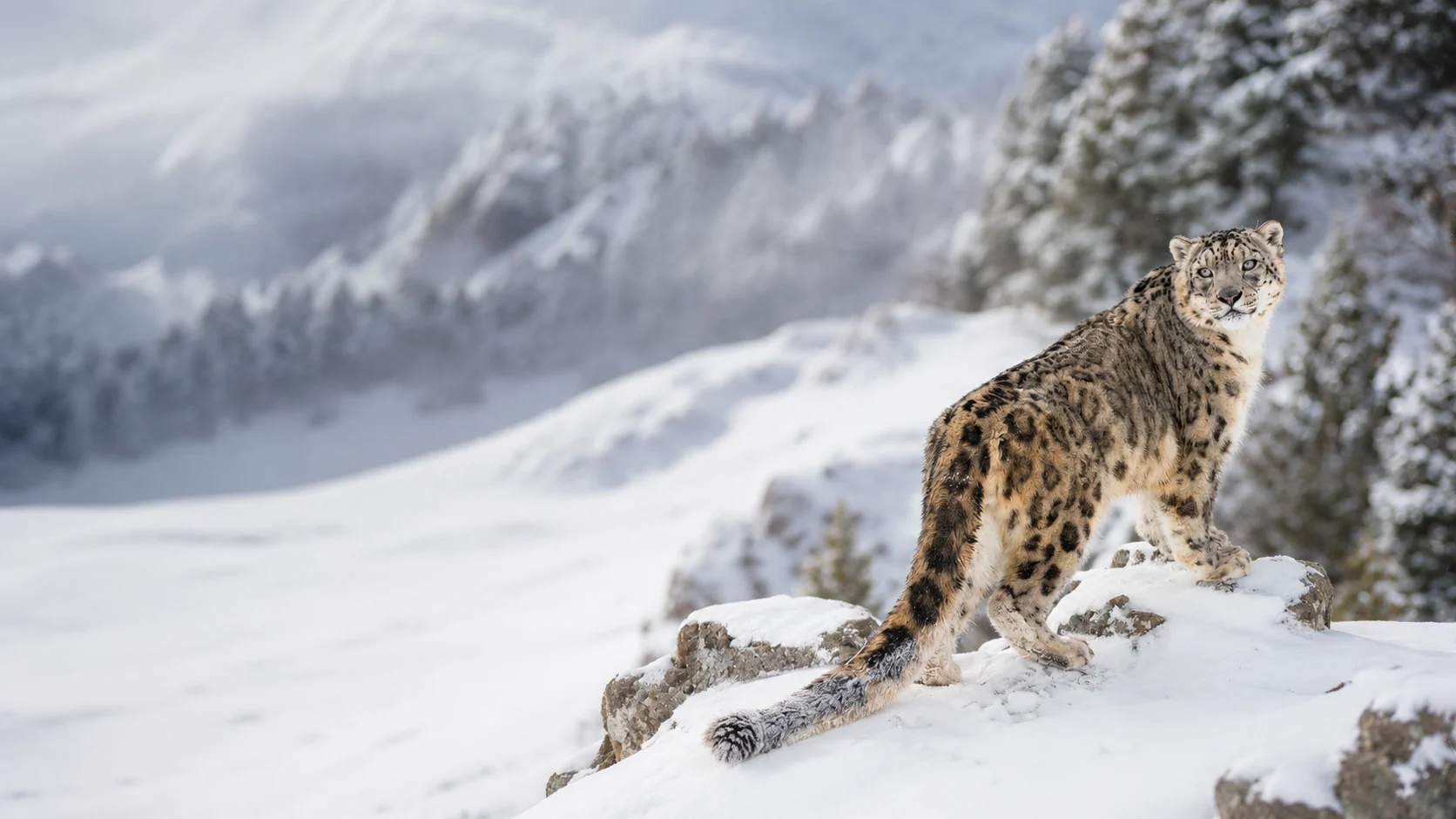
Snow leopard travel is fundamentally different from a conventional safari. The landscape is vast, the air is thin and each day is shaped by fresh signs, prey movement, weather and information shared between local trackers. Time and adaptability are more valuable than a rigid programme.
The itinerary begins with deliberate acclimatisation in Leh before moving to Ulley. Warm layers, realistic walking expectations and a strong support team are essential. A sighting can never be promised; the expedition remains extraordinary because the entire mountain ecosystem is part of the search.
The flight gains altitude quickly, making acclimatisation days essential.
The route is adjusted around snow, road and valley conditions.
The return is timed with a buffer before the Delhi flight.
A final weather margin protects onward plans.
Time in one landscape allows the trackers to follow signs and changing animal movement.
Experienced Ladakhi spotters read ridgelines, prey behaviour, tracks and recent reports.
Search for ibex, urial, Tibetan wolf, golden eagle and lammergeier alongside the snow leopard.
Use monasteries and gentle local exploration while the body adjusts to altitude.
The integrity of the journey rests on fieldcraft and habitat, never a guaranteed encounter.
Delhi — India's ancient and modern capital — is the starting point for your Snow Leopard Expedition. Your Epic Indian Travel representative meets you on arrival at Indira Gandhi International Airport and transfers you to your hotel in the heart of the city. The evening is yours to rest, recover from your journey and begin absorbing the extraordinary energy of one of the world's great capitals.
On arrival, the practical details are handled quietly. Your naturalist guide joins you for a welcome dinner and a detailed briefing on the expedition ahead — covering the landscapes of Ladakh, the snow leopard and its habitat, acclimatisation advice and what to expect at each destination. Equipment check and any last-minute preparations. Your guide is available to answer all questions about the itinerary, the high-altitude environment and the wildlife you are likely to encounter.
Even on arrival day, Delhi makes an impression — the scale, the colour, the noise and the history of this 3,000-year-old city are immediately apparent. If time and energy permit, an evening walk in one of Delhi's historic neighbourhoods offers a vivid introduction to India. Tomorrow brings a full day to explore Delhi's extraordinary monuments and markets before the flight north to Leh and the high Himalayas.
For “Arrive Delhi — Gateway to the Himalayas”, the arrival is deliberately light: assistance, transfer and check-in are handled as one sequence, with no compulsory sightseeing added after the flight.
Overnight: Delhi
A full day in Delhi — part sightseeing, part preparation. Delhi's UNESCO World Heritage monuments offer extraordinary subjects for the curious traveller: the geometric perfection of Humayun's Tomb, the soaring minarets of the Qutb Minar and the living history of Old Delhi's Chandni Chowk bazaar. This is also the day to finalise all expedition preparations before tomorrow's flight to Leh.
Morning visit to Humayun's Tomb — a masterpiece of Mughal architecture and a UNESCO World Heritage Site that served as the inspiration for the Taj Mahal. The gardens and symmetrical design offer superb photography in the early light. Afternoon at the Qutb Minar complex — Delhi's oldest surviving monument and another UNESCO World Heritage Site, with the 73- metre minaret dominating the skyline of South Delhi.
An evening rickshaw ride through the lanes of Old Delhi — Chandni Chowk, the spice market of Khari Baoli and the Jama Masjid — offers an unforgettable sensory introduction to India at its most vivid. Final expedition briefing with your naturalist guide: acclimatisation protocols for Leh, packing advice for the cold desert climate and a detailed overview of snow leopard tracking techniques.
For “Delhi — Monuments, Markets & Expedition Briefing”, the sequence follows light, opening hours and local traffic, prioritising the principal visit while keeping secondary stops adaptable.
Overnight: Delhi
An early morning flight from Delhi's Indira Gandhi International Airport to Leh — Ladakh's high-altitude capital at approximately 3,500 metres. The flight itself is spectacular, crossing the Himalayas with views of snow-capped peaks stretching to the horizon. On arrival, acclimatisation is the priority — the jump of more than 3,000 metres in altitude demands a careful and restful first day.
On arrival, the practical details are handled quietly. Your Epic Indian Travel representative meets you at Leh airport (photography is not permitted as it is a military airport) and transfers you to your lodge — approximately 30 minutes from the airport. The first afternoon is spent resting and acclimatising. Avoid strenuous activity, drink plenty of hot water, and allow your body to adjust to the reduced oxygen levels at altitude.
Do not climb stairs or exert yourself on the first day — rest is essential for a safe and enjoyable expedition. Stay well hydrated with hot water or herbal tea; avoid alcohol on the first day. Do not shower on the first day; avoid daytime napping to ensure good sleep at night. If you experience headaches, nausea or unusual symptoms, inform the lodge staff immediately.
The move described in “Fly Delhi to Leh — Acclimatisation Day” is scheduled as part of the experience, with a realistic departure and enough margin for an unhurried arrival.
Overnight: Leh
A full day in Leh — cultural exploration and gentle outdoor activity to continue acclimatisation before the move to Ulley. Leh's extraordinary setting — ringed by snow-capped peaks and steeped in Tibetan Buddhist culture — makes this a deeply rewarding day. The Indus River, flowing through the valley below, is a birdwatcher's paradise and offers the first taste of Ladakh's remarkable avian life.
Morning visit to Thiksey Monastery — the largest monastery in Leh and one of the most impressive in all of Ladakh. Resembling the Potala Palace in Lhasa, Tibet, its whitewashed buildings rise dramatically up the hillside above the Indus Valley. The monastery's halls, prayer rooms and courtyards, home to remarkable Tibetan Buddhist art, thangka paintings and a 15-metre Maitreya Buddha statue. The views across the valley from the monastery roof are extraordinary.
Spend the afternoon along selected stretches of the Indus, where stony banks and open water can support ibisbill, merganser, redstart, shelduck and other high-altitude species. Bird movement varies with season, weather and river conditions, so the session is guided by current local information rather than a fixed checklist.
“Leh — Thiksey Monastery, Indus River & Birdwatching” is kept focused on one principal experience, with the surrounding hours left adaptable to access, weather and guest energy.
Overnight: Leh
After a leisurely breakfast, the expedition moves into its most thrilling phase — the drive from Leh to Ulley, a remote village of just six households that is one of the finest snow leopard habitats in all of Ladakh. The two-and-a-half-hour drive through the Trans-Himalayan landscape is spectacular, passing the confluence of the Indus and Zanskar rivers at Sangam before climbing into the high valleys where the mountain ghost roams.
Departing Leh after breakfast, the route follows National Highway 1 before turning into the high valleys. The first highlight is Sangam — the dramatic confluence of the Indus and Zanskar rivers, where the turquoise Zanskar meets the grey-green Indus in a spectacular meeting of waters. The road winds through Ladakhi villages and past military installations before climbing to the Ulley valley. If the tracker team reports a snow leopard sighting en route, the vehicle will divert immediately to the location.
Arrive at the lodge, settle in over a hot drink and meet the tracking team. If light, weather and recent signs are suitable, begin with a short scan of the surrounding cliffs; otherwise, use the afternoon for orientation and equipment preparation. The landscape is genuine snow-leopard habitat, but even expert trackers cannot predict when an animal will appear.
For “Leh to Ulley — Drive into Snow Leopard Country”, field sessions are balanced with proper recovery time, allowing the naturalist to respond to weather, tracks and park conditions.
Overnight: Ulley
The first full day of snow leopard tracking begins before dawn. Rise early, dress in warm layers and step outside to join the lodge's dedicated trackers as they scan the mountainside in the first light of day. The cliffs and rocky slopes surrounding Ulley are prime snow leopard habitat — and some guests have spotted leopards from the lodge itself.
In the field, the day follows the natural rhythm of the habitat. Join the trackers at first light as they systematically scan the surrounding cliffs and valleys with high-powered spotting scopes. Snow leopards are most active in the early morning, often moving between hunting grounds as the light improves. The trackers communicate with a network of spotters across the valley — any sighting, however distant, triggers an immediate response. Be prepared to walk or hike to reach the best viewing position.
While searching for snow leopard, the surrounding landscape offers remarkable wildlife encounters. Himalayan Ibex — the snow leopard's primary prey — are frequently seen on the cliffs in large herds, their curved horns silhouetted against the sky. Red Fox, Tibetan Wolf and Ladakh Urial are all regularly encountered in the Ulley valley. The skies above are patrolled by Golden Eagle and Lammergeier — the bearded vulture with its extraordinary 2.8-metre wingspan.
For “Ulley — First Full Day Snow Leopard Tracking”, field sessions are balanced with proper recovery time, allowing the naturalist to respond to weather, tracks and park conditions.
Overnight: Ulley
Two more full days in the Ulley valley — the rhythm of the expedition settles into a deeply satisfying pattern of early morning tracking sessions, shared sightings and long hours scanning the dramatic Trans-Himalayan landscape. Nothing is fixed in advance on this expedition — everything responds to what the snow leopard does. The trackers are out before dawn every day, and the team moves immediately to any confirmed sighting.
In the field, the day follows the natural rhythm of the habitat. The trackers cover the full extent of the Ulley valley and the surrounding ridgelines, scanning systematically for the snow leopard's distinctive spotted coat against the grey rock. Their knowledge of individual leopard territories and movement patterns is extraordinary. Spotting scopes are set up at the best vantage points — when a leopard is located, guests can observe through the scope or, if close enough, with binoculars. A mobile phone holder for the spotting scope allows excellent photography even at long range.
Golden eagle, lammergeier, Himalayan griffon, snowcock, chough and accentor are among the species that may be encountered in the Trans-Himalayan landscape. Conditions decide how much birding can be combined with mammal tracking. Evenings at the lodge are used to review signs, weather and the following day’s search plan.
For “Ulley — Continued Snow Leopard Tracking & High-Altitude Birding”, field sessions are balanced with proper recovery time, allowing the naturalist to respond to weather, tracks and park conditions.
Overnight: Ulley
The expedition extends its search radius to the neighbouring villages of Saspoche and Hemis Shukpachen — two of the finest locations in the entire Ulley area for both snow leopard and Tibetan Wolf. A small pack of five to eight wolves is resident between these two communities, and the combination of wolf and snow leopard in the same landscape makes these days among the most exciting of the entire expedition.
The drive to Saspoche and Hemis Shukpachen passes through dramatic Trans-Himalayan scenery — narrow valleys, frozen streams and the extraordinary silence of the high-altitude cold desert. Both villages are traditional Ladakhi communities where the local people live alongside the wildlife. The resident wolf pack is one of the most reliably encountered in Ladakh — the trackers know the pack's territory well and can often predict where they will be found. Watching wolves hunt in this landscape is an unforgettable experience.
While trekking in search of snow leopard and wolf, the rocky cliffs and slopes are home to large herds of Ladakh Urial and Asiatic Ibex — two of the snow leopard's primary prey species. Watching these agile animals navigate near-vertical terrain is remarkable. The combination of predator and prey in this landscape — snow leopard, wolf, ibex and urial — offers a rare and complete picture of a functioning high-altitude ecosystem, largely unchanged for thousands of years.
For “Ulley — Saspoche & Hemis Shukpachen — Wolf & Snow Leopard Territory”, field sessions are balanced with proper recovery time, allowing the naturalist to respond to weather, tracks and park conditions.
Overnight: Ulley
Ulley — Final Tracking Day & Return to Leh is planned around the natural rhythm of the habitat. Field time is balanced with a proper rest interval, while the naturalist adapts the route to weather, tracks and current park conditions; wildlife encounters can never be guaranteed.
In the field, the day follows the natural rhythm of the habitat. Rise before dawn for one last scan of the surrounding cliffs and valleys. The trackers will have been monitoring the area since first light — any overnight activity or fresh tracks will be followed up immediately. Even on the final morning, new sightings are possible — the snow leopard's movements are unpredictable, and some of the expedition's most memorable encounters have come on the last day. Stay alert and patient to the very end.
Leh.
For “Ulley — Final Tracking Day & Return to Leh”, field sessions are balanced with proper recovery time, allowing the naturalist to respond to weather, tracks and park conditions.
Overnight: Leh
The final arrangements for Leh to Delhi — Fly Home are kept deliberately simple: check-out, a private transfer and realistic airport margin are coordinated around the confirmed flight time.
The morning flight from Leh to Delhi retraces the spectacular Himalayan crossing in reverse — a final opportunity to absorb the extraordinary scale of the mountains from above before returning to the plains. On arrival in Delhi, your representative meets you at the airport and assists with onward arrangements. For guests with an overnight stay in Delhi, the evening is free to explore, dine or simply rest after an extraordinary expedition.
Day 13 brings the final departure — after breakfast, transfer to Indira Gandhi International Airport for your international flight home. The memories of Ladakh — the silence of the high valleys, the drama of the Himalayan landscape and, above all, the extraordinary privilege of watching a snow leopard in the wild — will stay with you for a lifetime.
For “Leh to Delhi — Fly Home”, the closing day protects the flight connection with a realistic transfer margin and no unnecessary programme added before departure.
Overnight: Delhi
Reliable heating, oxygen awareness and calm service take priority during the first days.
Simple warmth, local hospitality and proximity to the tracking valleys define the stay.
In deep winter, heating, food, access and attentive local staff matter more than decorative luxury.
Hotel names and room categories for Snow Leopard Expedition in Ladakh are confirmed after your dates, preferred character, budget and current availability are understood.
Adjust Snow Leopard Expedition in Ladakh with an extra recovery night, a shorter road day or a gentler start where the route and your energy benefit.
For Snow Leopard Expedition in Ladakh, choose among the stay characters described above, then set room category and service level around how you expect to use the hotel.
For Snow Leopard Expedition in Ladakh, add specialist tracking days, village context and a photography focus while protecting the acclimatisation and weather buffer the expedition needs.
For Snow Leopard Expedition in Ladakh, for January to March, subject to winter access and flight conditions, we refine sightseeing hours, transfer starts and access around heat, rain, winter conditions, crowds and local operating days.
Epic Indian Travel Concierge
Tell us which chapter of Snow Leopard Expedition in Ladakh matters most and where you would prefer more time, privacy or specialist depth.