Story from the Road · Opening scene
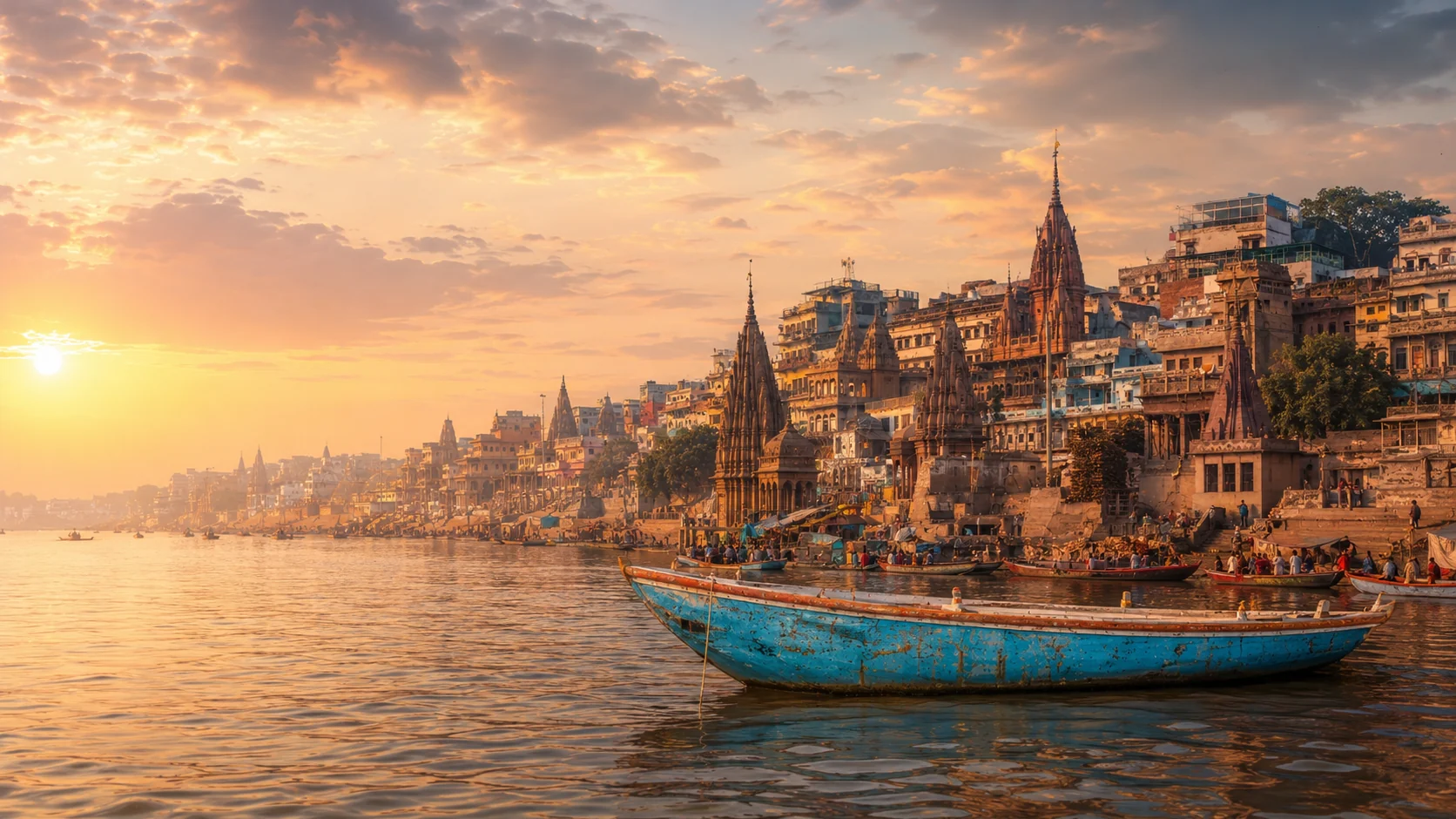
Before sunrise, the Ganges is almost silver. A wooden boat eases away from the bank while the ghats emerge from darkness one step, one bell and one small flame at a time.
Begin before the city fully wakes
A first encounter with Varanasi is best made from the water. Leave the hotel while the streets are still subdued and board a simple private boat before sunrise. The ghats appear gradually rather than all at once: pilgrims descend to bathe, priests prepare small shrines, laundrymen begin their work and smoke rises from breakfast stalls behind the riverfront.
The quality of the experience depends less on the boat than on its timing and position. A knowledgeable guide helps identify the principal ghats without narrating every minute. Photography should remain discreet, especially around worship, bathing and cremation areas. The aim is not to collect every image; it is to understand how daily life, faith and the river occupy the same space.
Walk the city behind the ghats
The river is only one reading of Varanasi. Later in the morning, enter the lanes on foot with a guide who can navigate their changing rhythm. Small shrines, flower sellers, silk workshops, tea stalls and family homes sit close together. The route should be chosen around the traveller’s comfort and interests rather than following a fixed procession through the busiest lanes.
A visit near the Kashi Vishwanath precinct requires sensitivity to security arrangements and religious practice. Sarnath, where the Buddha delivered his first teaching, offers a different atmosphere and deserves a separate half-day rather than being squeezed between city visits. Together, the old city and Sarnath reveal that Varanasi is not one story but several traditions meeting in the same region.
The city is most powerful when the guide knows when to explain—and when to let the river carry the moment.
See the evening ceremony in context
The Ganga Aarti is public, ceremonial and highly attended. It should not be presented as a private ritual or exclusive performance. Good planning is about choosing the viewing position, arriving before the crowd compresses the riverfront and explaining what is taking place without intruding on the ceremony.
A boat view gives scale; a position on the ghat gives proximity. Neither is universally better. The right choice depends on mobility, tolerance for crowds and whether the traveller has already seen the city from the river at dawn.
Give Varanasi enough time
Two nights are the practical minimum for a dawn boat ride, an old-city walk and the evening Aarti. Three nights allow Sarnath, a silk or craft visit and unhurried time at the hotel. Cooler months are generally more comfortable, while river levels and access can vary during the monsoon.
Varanasi should not be used as a dramatic one-night interruption between flights. When paced carefully, it becomes a thoughtful chapter of a North India journey rather than a collection of intense sights.