Planning Note · Opening scene
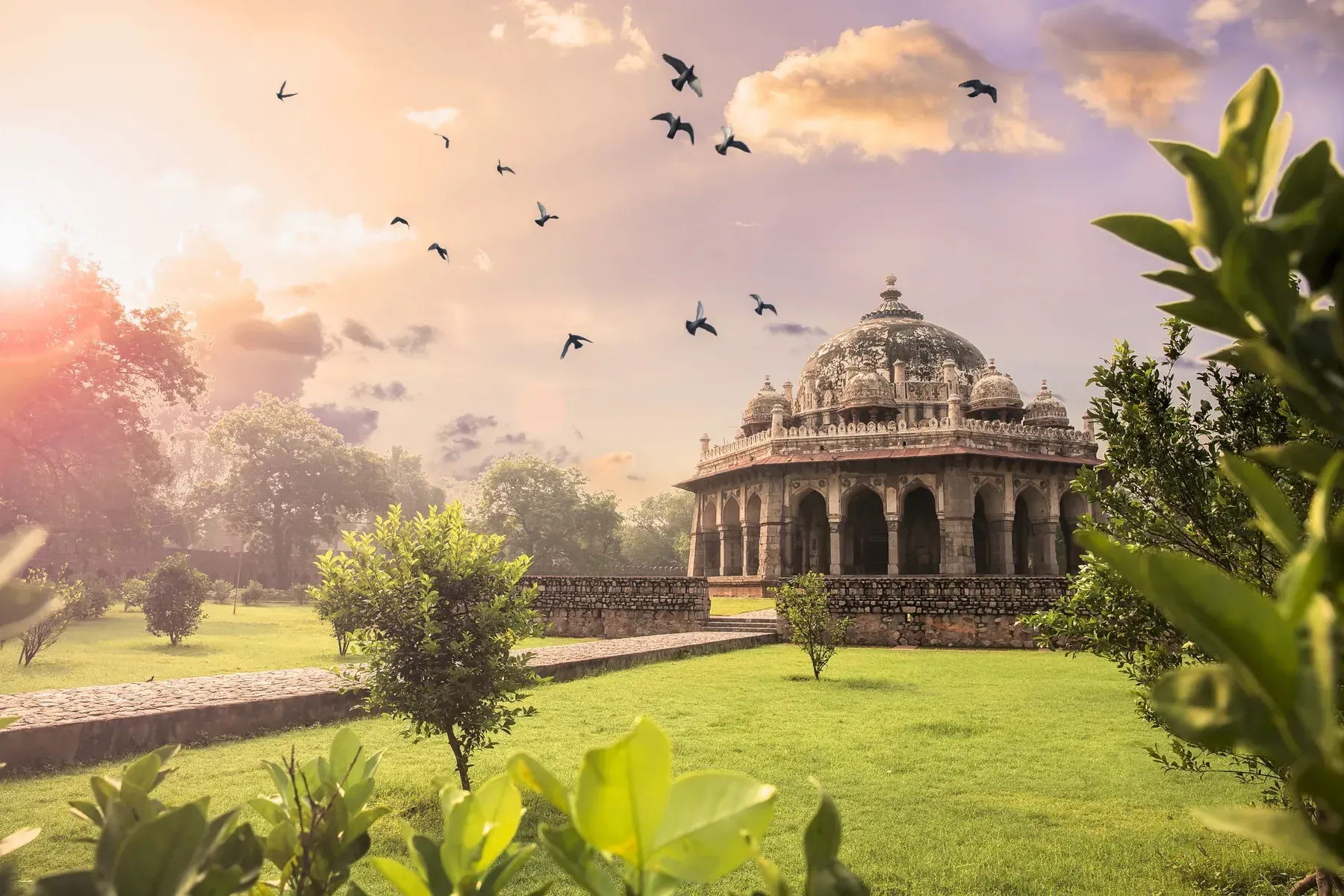
Morning light falls across a Mughal garden; by the next day, a rickshaw is moving through lanes dense with spice, prayer and trade. Delhi works when these worlds are allowed to remain distinct.
Day one: gardens, tombs and the ceremonial capital
Begin with one of Delhi’s quieter green spaces before visiting Humayun’s Tomb and the Qutub complex. The purpose is not simply to see two UNESCO-listed sites but to understand the architectural progression that later shaped Mughal India.
After lunch, drive through the central avenues around India Gate and the government district, then choose one contemporary neighbourhood, museum or market. Trying to add Old Delhi to the same day usually produces more time in traffic and less attention at each place.
Day two: Old Delhi in the morning
Enter Old Delhi before its lanes become most crowded. Jama Masjid, a short rickshaw journey and a guided walk through Chandni Chowk can reveal religious, commercial and culinary layers within a compact area. The route should be adapted around mobility and interest rather than presented as an endurance test.
A visit to a Sikh gurudwara can be meaningful when its traditions and community kitchen are explained respectfully. Food tasting should be selective, hygienic and matched to the guest’s comfort.
Delhi becomes clearer when the itinerary stops trying to make its different cities look alike.
Choose the hotel by the next movement
Delhi hotels range from grand central addresses to quieter South Delhi properties and airport-adjacent stays. The best location depends on the sightseeing plan, arrival time and onward route. A very late international arrival followed by an early Agra departure calls for different priorities than a three-night city stay.
Traffic is not a minor inconvenience to be ignored in the itinerary. Good planning groups visits geographically and protects time for rest, meals and unexpected delays.
Use Delhi as more than a gateway
Two full days provide a confident first reading. A third can add museums, design, food, contemporary art or neighbourhood visits. Delhi becomes more rewarding when the guest sees it as a living capital rather than an airport stop before the Taj Mahal.
The right guide helps connect its many histories without overwhelming the traveller. The goal is not to explain every dynasty; it is to make the city legible.