Story from the Road · Opening scene
Late in the day, Jaisalmer seems to gather the desert light into its walls. From a distance the fort is the postcard; inside and below it, the city is still trading, worshipping, carving and carrying water.
Enter the fort as a living neighbourhood
Jaisalmer Fort is not an empty monument. Homes, temples, shops and guesthouses remain within its walls. A good walk focuses on how the fort functions as well as its architecture: Jain temples, carved façades, narrow lanes and views across the lower city.
Because the fort is inhabited, responsible visiting matters. Water use, waste and the pressure of tourism affect the structure and its residents. It is worth spending with established local guides and craftspeople rather than treating the fort as a quick viewpoint.
Give the lower city equal attention
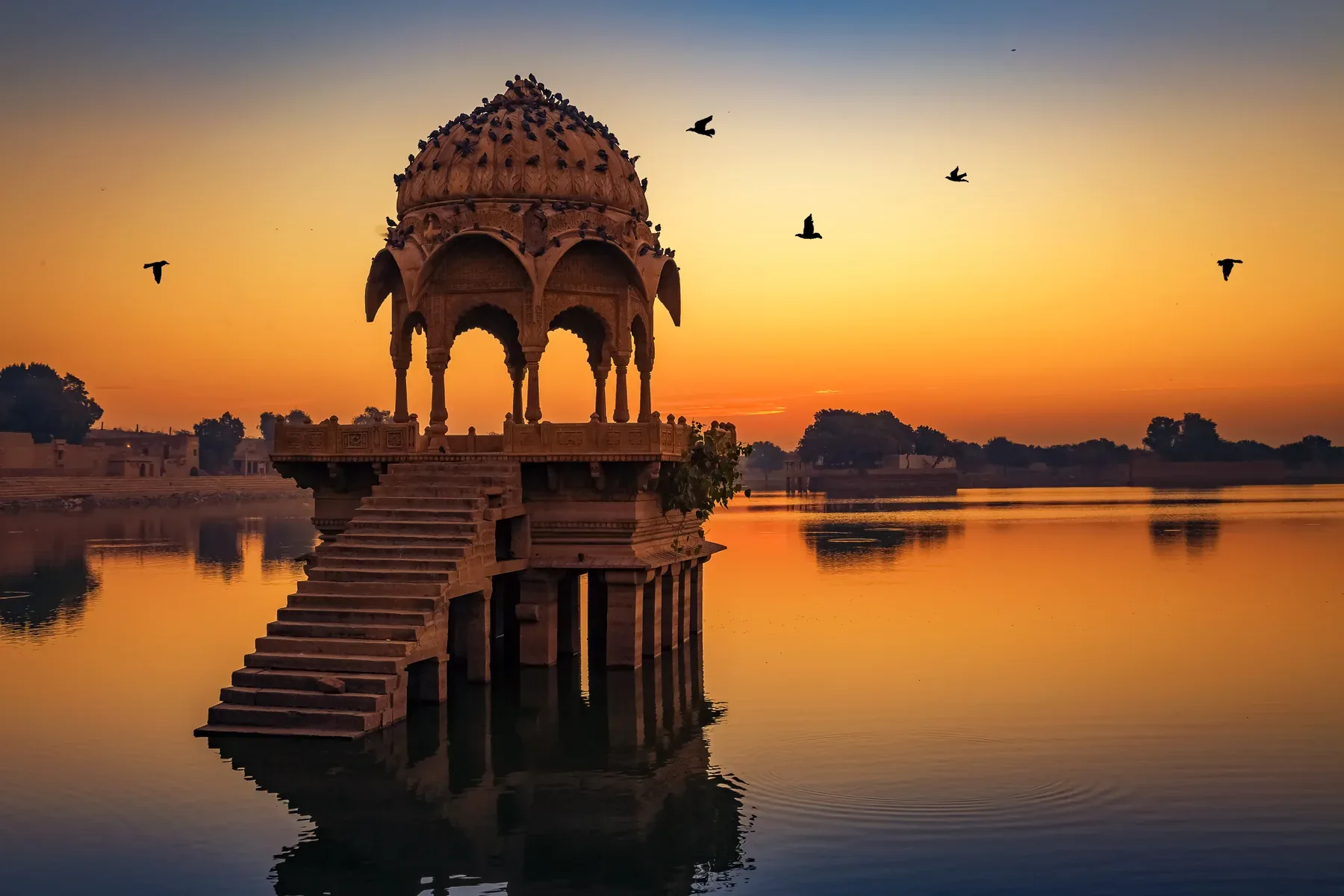
The merchant havelis below the fort reveal the wealth and carving traditions of the old trade routes. Patwon Ki Haveli and quieter residential lanes can be visited with the markets and Gadi Sagar Lake, ideally early or late in the day when the sandstone changes colour.
The city’s pace is slower than Jaipur or Jodhpur. A carefully located hotel allows the guest to return for rest rather than remaining in traffic and heat through the middle of the day.
The desert is most affecting after the performance ends and the horizon becomes quiet again.
Choose the desert experience carefully
Not every desert camp offers the same atmosphere. Some are large and entertainment-led; others are smaller, quieter and farther from the busiest dunes. The right choice depends on whether the guest wants comfort, privacy, astronomy, village contact, a camel ride or simply an evening in open landscape.
A desert night should not rely on staged “authenticity.” Music and dance are meaningful when artists are properly engaged and the setting respects both performers and guests. Private dining can be arranged, but the desert remains a working environment rather than a blank luxury backdrop.
Plan two or three nights
Two nights allow the fort, havelis and one desert evening. Three nights create space for craft, rural excursions and a less hurried transition from Jodhpur or Jaipur. The cooler season is generally more comfortable; summer heat can significantly restrict daytime exploration.
Jaisalmer is most rewarding at the end of a Rajasthan route, when its scale and silence provide a deliberate contrast to the palace cities.