Field Story · Opening scene
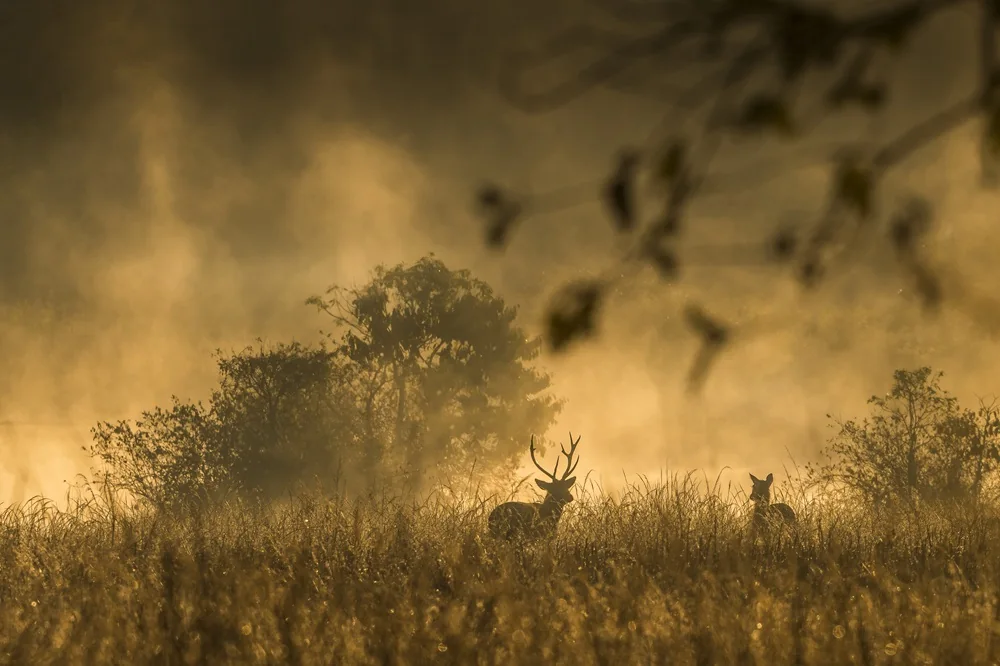
The first indication is not the tiger. It is the forest becoming alert: a langur’s abrupt call, a deer staring into bamboo and a naturalist asking the driver to stop talking.
The forest changes the encounter
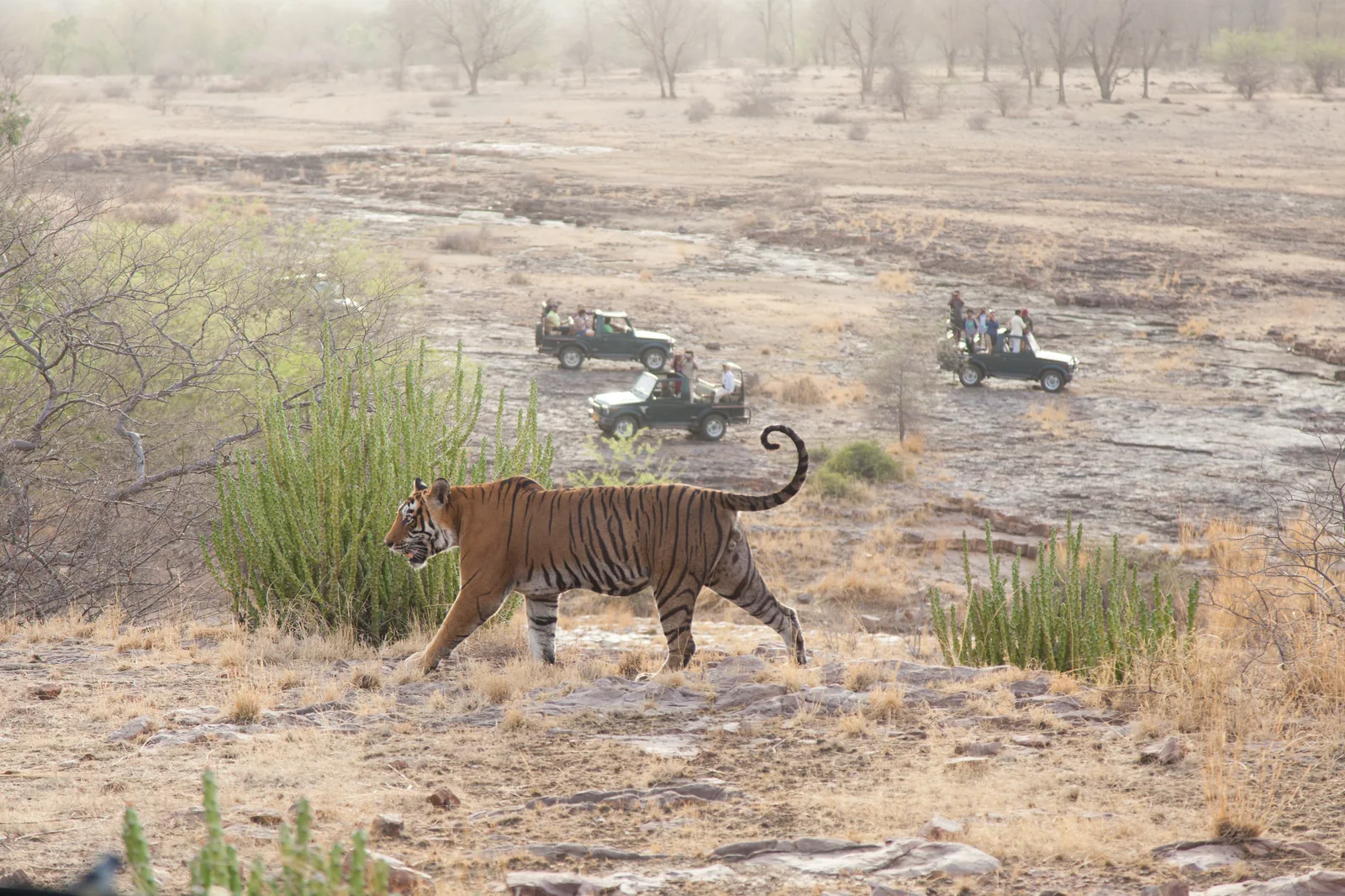
In Central India and Rajasthan, visibility can shift within minutes. Sal forest, bamboo, teak, grassland and dry ravines create very different ways of finding wildlife. Naturalists listen for alarm calls, study tracks and watch the behaviour of deer and langurs. A tiger may cross an open road for a few seconds, rest beside water or remain invisible in cover while the forest signals its presence.
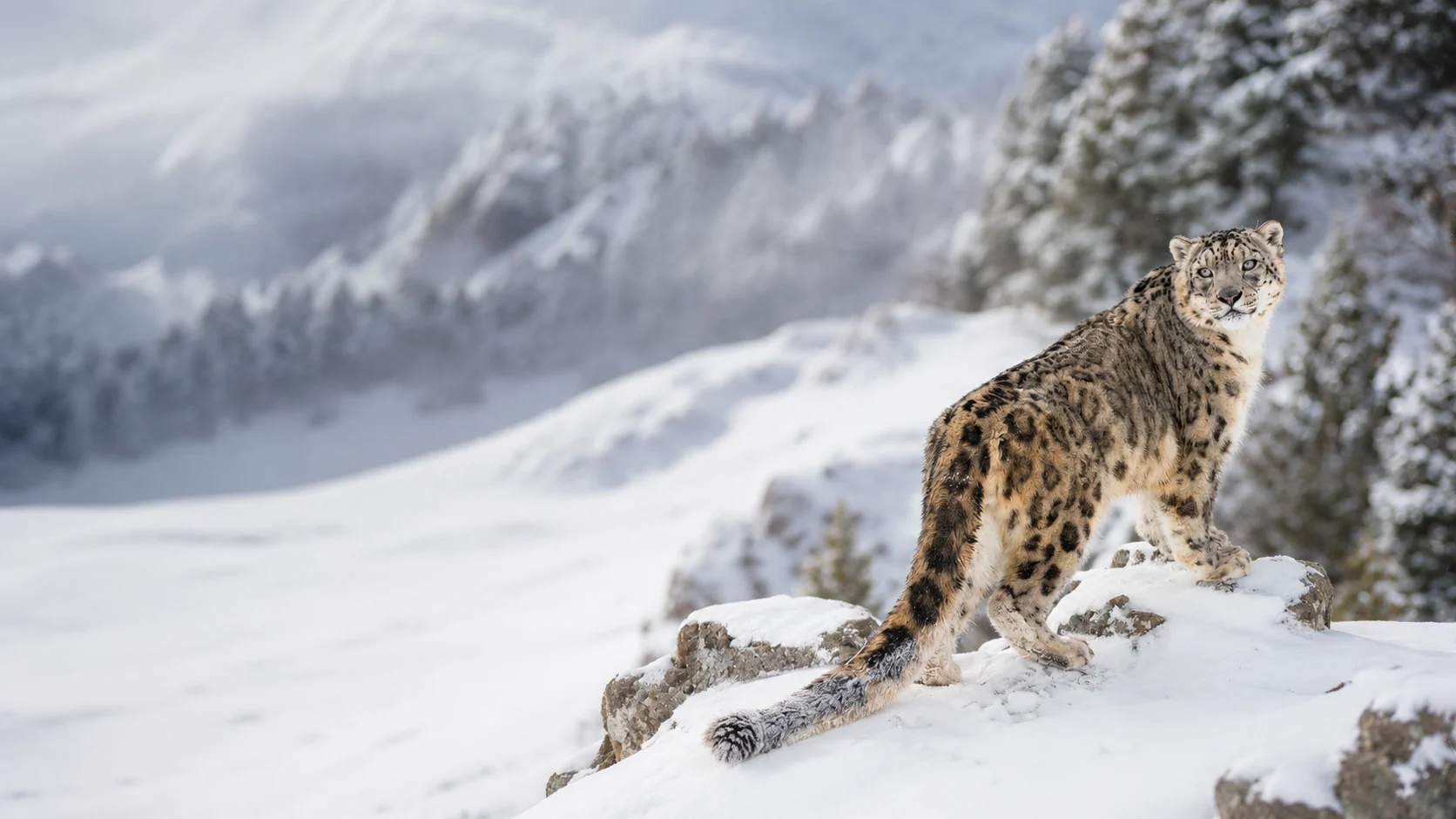
That uncertainty is not a weakness. It is the character of the experience. Travellers who arrive expecting a guaranteed close sighting are likely to miss the wider intelligence of the forest: raptors, wild dogs, gaur, sloth bears, deer, smaller cats and the change in bird activity through the day.
Choose the reserve for the whole journey
Ranthambore combines dry landscape, lakes and the visual presence of a historic fort. Bandhavgarh is compact and richly associated with tiger tracking. Kanha offers broad meadows and a more expansive forest experience. Pench has open teak country and strong birdlife, while Satpura can add varied activities and a quieter pace depending on current regulations.
No reserve should be sold as certain. The better decision considers season, lodge quality, travel time, permit availability, landscape and the other species or experiences the guest values. Two reserves often create a more balanced journey than trying to cover three or four at speed.
Uncertainty is not a flaw in the safari. It is the condition that keeps the forest wild.
Build the itinerary around field time
A serious first safari deserves at least four drives, and more for photographers or guests travelling specifically for tigers. Early starts and late returns are part of the rhythm. Rest between drives matters, which is why lodge location and meal timing can influence the quality of the trip as much as the room category.
A private vehicle gives greater control over pace and photography, subject to park rules and availability. The naturalist should be chosen for observation and judgement, not for dramatic promises. Good field teams know when to wait, when to move and when to let another vehicle pass.
Keep expectations responsible
Wildlife remains wild. Ethical planning means no guarantee of a tiger, no pressure on drivers to crowd an animal and no itinerary that depends on one sighting to feel successful. Park zones, permits and operating rules can change, so final arrangements must be confirmed close to travel.
The strongest safari journeys leave room for surprise. A tiger may be the defining moment, but the memory often includes the dawn cold, the first alarm call, a herd moving through grass or the quiet conversation around the lodge fire after the drive.